231-941-0215 sale@namkeenmachine.com 2707 Aero Park Drive Traverse City, MI
Eng
  • Eng
  • Deu
  • Fra

China Top Tank Vacuum Manufacturers How to Choose?

Choosing among China’s top tank vacuum manufacturers requires more than comparing prices or polished websites. A reliable supplier should understand the complete working environment, including tank volume, vacuum pressure, liquid properties, temperature, and cleaning procedures. The phrase “tank vacuum” covers different systems, so one standard design rarely fits every application.

Experienced buyers usually examine the pump type, tank material, weld quality, sealing method, control panel, and expected service life. Stainless steel grades should match the product and cleaning chemicals. The vacuum gauge should be readable during operation. Safety valves, inspection ports, and emergency shutoffs also deserve close attention. Small details matter.

Ask manufacturers for drawings, test records, material certificates, and clear warranty terms. A factory video can help, but it cannot replace an audit or witnessed testing. When possible, inspect sample welds and request a performance test under realistic conditions. Check whether engineers respond with practical calculations instead of vague promises. After-sales support matters, especially when spare parts must cross borders.

Certifications are useful evidence, not automatic proof of quality. Requirements may vary by industry and destination market. Some suppliers appear highly capable but provide weak documentation. That is worth questioning. A careful selection process should balance technical performance, communication, production capacity, delivery reliability, and total ownership cost. The cheapest tank vacuum may become expensive after installation. A dependable manufacturer explains limitations honestly and helps buyers choose a system that works safely in daily production.
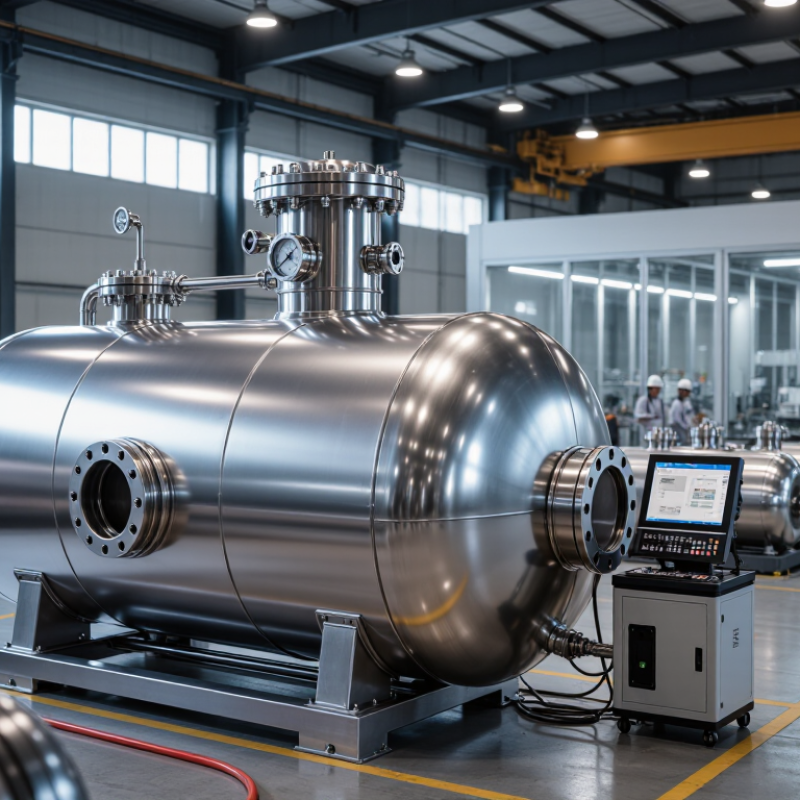
China Top Tank Vacuum Manufacturers How to Choose?

What Is a Tank Vacuum System and How Does It Work?

A tank vacuum system combines a sealed vessel, vacuum pump, separator, valves, gauges, and hoses. The pump removes air from the tank. Internal pressure then falls below atmospheric pressure. Outside air pressure pushes liquid, dust, or other permitted materials through the inlet. The separator protects the pump from droplets and particles.

The operating cycle is simple, but small design errors matter. A wet-load tank needs corrosion-resistant steel and an effective liquid shut-off device. A dry-load tank needs suitable filtration and easy filter access. The vacuum level controls lifting force, while airflow controls collection speed. A large tank is not always better. It may increase cleaning time and energy use.

Fortune Business Insights valued the global vacuum pump market at about 5.83 billion dollars in 2023. Its report forecasts continued growth through 2032, driven by manufacturing and process industries. When comparing Chinese tank vacuum manufacturers, check pump performance under continuous operation, tank deformation resistance, seal quality, noise, and service records. ASME Section VIII and EN 13445 offer useful pressure-vessel references, but vacuum-rated design also requires collapse analysis. A neat specification sheet can still mislead. I would request test curves, material certificates, and a witnessed factory test before purchasing.
How Vacuum Pressure Changes Water’s Boiling Point

A tank vacuum system removes gas from a sealed vessel, lowering its absolute pressure. At lower pressure, water boils at a lower temperature, which can support processes such as evaporation and drying. The chart shows approximate water saturation values; actual system performance depends on the pump, vapor load, leakage, and vessel design.

Which Types of Tank Vacuum Manufacturers Are Available in China?

China’s tank vacuum manufacturers usually fall into four practical groups. Sanitary manufacturers build stainless-steel tanks for food, dairy, cosmetics, and pharmaceutical production. Their equipment often uses polished interiors, hygienic valves, and clean-in-place systems. Industrial manufacturers serve chemical, resin, oil, and wastewater applications. They focus on corrosion resistance, thicker shells, and stable vacuum performance. Mobile manufacturers supply vacuum tankers or skid-mounted units for factories needing flexible movement. Custom engineering manufacturers combine tanks, pumps, controls, heating, and filtration for special processes.

Market data supports this broad division. Grand View Research reported that the global industrial vacuum pumps market was valued at over USD 2 billion in 2023. Its analysis identifies chemical, pharmaceutical, food, and semiconductor production as important application areas. A 2024 report from MarketsandMarkets also highlights process automation and energy efficiency as major purchasing factors. These trends explain why Chinese suppliers increasingly offer digital pressure monitoring, variable-speed pumps, and automated safety controls.

Look beyond the catalog. Ask for material certificates, vacuum-leak test records, weld inspection results, and drawings showing tank volume and working pressure. For sanitary equipment, inspect surface roughness and drainability. For chemical service, verify compatibility with the actual medium and temperature. A lower price may reflect thinner steel or weaker instrumentation. That matters.

This classification is useful, but not perfect. Some factories are strong fabricators yet weak system integrators. I would request a factory video, reference project, and a witnessed performance test before purchasing. Supplier selection should match the process, not only the tank’s appearance.

How to Evaluate a Chinese Tank Vacuum Manufacturer’s Capabilities?

How to Evaluate a Chinese Tank Vacuum Manufacturer’s Capabilities?

A capable tank vacuum manufacturer should show more than polished product photos. Ask for pump curves, vacuum-hold test records, tank drawings, and material certificates tied to the exact model you plan to buy. Check whether the test setup matches your tank volume, target pressure, and operating temperature. A curve without test conditions is hard to compare. Request a live factory audit or a video call from the test area; look for calibrated gauges, recorded readings, and traceable serial numbers. Grand View Research estimated the global vacuum pump market at about US$6.5 billion in 2023, with growth expected through 2030. That figure signals a competitive market, not proof that any supplier is qualified.

Tips: Send one written specification to every candidate. Compare the same duty cycle, inlet conditions, noise limit, and service interval. Ask who handles commissioning and spare parts, and get response times in writing. Confirm quality certificates with the issuing body, then inspect a sample report. For custom tanks, request weld inspection records and dimensional checks. A factory may have good equipment but weak documentation. That matters. I would also ask for a reference installation with similar fluid and capacity; references can be imperfect, but silence is a warning.

What Quality, Safety, and Certification Standards Should You Check?

China Top Tank Vacuum Manufacturers: How to Choose?

When assessing a tank vacuum, request documented test results for the exact model, not only a general factory certificate. Check pressure or vacuum ratings, material specifications, weld inspection records, and leak-test procedures. Ask how the unit performs under the temperature, chemical exposure, and duty cycle you expect. Details matter. A neat nameplate does not prove safe operation. Verify that safety devices, such as pressure-relief components and emergency shutoffs, match the equipment design and applicable local requirements. For electrical components, review the relevant conformity documentation and inspection records.

Quality-system certification can help assess a supplier, but it does not certify every product. The ISO Survey 2022 reported 1,265,216 valid ISO 9001 certificates worldwide; this figure reflects certified management systems, not independently tested vacuum tanks. Request the certificate’s scope, issuing body, and validity, then compare them with the manufacturer’s actual production site. For pressure equipment, confirm which design code and inspection regime apply in your destination market, and ask for traceable material certificates and a clear manual. I would still inspect sample records myself. Paperwork can be polished, while a small gap in traceability remains easy to miss. Ask for calibration dates, acceptance criteria, and the name of the responsible inspector before placing an order.

How to Compare Quotes, Services, and Long-Term Supplier Value?

China Top Tank Vacuum Manufacturers: How to Choose?

When comparing China tank vacuum manufacturers, do not judge the lowest quotation first. Compare the complete technical scope. Check tank capacity, working vacuum, design pressure, material grade, weld procedures, surface treatment, and testing records. Ask for hydrostatic or leak-test reports, not only product photos. The International Energy Agency estimates that electric motor systems consume about 46% of global electricity. Therefore, pump efficiency and control quality can strongly affect operating costs. A cheaper unit may become expensive through higher electricity use and frequent seal replacement.

Tips: Request three itemized quotes. Compare pump power, warranty length, spare-part pricing, delivery time, and commissioning support. Ask whether engineers provide remote troubleshooting and documented maintenance schedules. ISO 9001 certification is useful, but it does not prove every vessel is well designed. Verify inspection responsibility and traceability for critical components.

Long-term value also depends on service discipline. A reliable supplier should provide drawings, operating manuals, test certificates, and clear response times. The U.S. Department of Energy notes that pumping systems can represent 25% to 50% of industrial energy use in some facilities. This makes lifecycle energy data important. Ask for expected vacuum performance under real loading conditions, not laboratory claims. A common purchasing mistake is ignoring downtime. One missed production shift can exceed the original price difference. I would also leave room for uncertainty; quoted service life is an estimate, not a promise. Evaluate evidence, references, and measurable after-sales commitments before signing.

China Top Tank Vacuum Manufacturers: How to Choose? — How to Compare Quotes, Services, and Long-Term Supplier Value

Evaluation dimension Information to request in each quote How to compare fairly Useful evidence and warning signs Suggested weight
Process and capacity fit Tank volume, product characteristics, operating cycle, required throughput, inlet conditions, and any cleaning or sanitary requirements. Give every bidder the same written duty conditions. Check that the proposed tank and system are sized for the actual process rather than compared by tank volume alone. Look for a completed application questionnaire or a clearly stated design basis. Clarify assumptions about product, temperature, and operating hours. 18%
Tank configuration Usable capacity, orientation, dimensions, connections, access openings, internal fittings, insulation, and included accessories. Compare usable capacity and the full equipment scope. Identify items listed as optional or supplied by the buyer. Request a dimensioned general-arrangement drawing and a scope-of-supply list. Confirm that connection sizes and locations suit the installation. 10%
Vacuum performance Vacuum target, measurement basis, pump type, pumping speed or capacity, estimated pump-down time, and performance at the stated operating conditions. Compare performance at the same duty point. Ensure pressure is stated consistently, preferably as absolute pressure or clearly defined gauge pressure, with units and test conditions. Ask for a system schematic and written performance conditions. A maximum vacuum figure without a test method or operating context is not enough for a like-for-like comparison. 15%
Materials and fabrication Wetted-part material grades, plate thickness, surface-finish requirements, weld procedures, and material traceability options. Match materials and finish to the product, cleaning method, and corrosion conditions. Confirm exactly which components are included in each material specification. Request material certificates and relevant fabrication or inspection records where required. Treat a general “stainless steel” description as incomplete until the grade is specified. 12%
Codes and documentation Applicable design and pressure-vessel requirements, electrical requirements, drawings, manuals, inspection records, and language or format requirements. Confirm requirements for the destination market and intended service before comparing price. Verify whether certifications apply to the actual equipment and project scope. Request a document list and sample records where appropriate. Do not assume that a general certificate covers every component or local approval requirement. 10%
Price and total landed cost Equipment price, options, packing, freight, insurance, duties, installation, commissioning, taxes, and payment terms. Build a normalized comparison that includes the same scope and delivery basis. Separate one-time purchase costs from recurring operating and service costs. Request an itemized quotation with currency, validity period, delivery terms, exclusions, and payment milestones. Investigate unusually low prices for omitted scope. 12%
Lead time and delivery Manufacturing lead time, inspection points, packing method, shipping estimate, and schedule dependencies. Compare the same schedule milestones and distinguish factory completion from arrival at the installation site. Ask for a milestone schedule and written confirmation of what may change the delivery date. Check packing suitability for the transport route. 5%
Warranty and acceptance Warranty duration and start date, covered components, exclusions, response process, and factory or site acceptance tests. Compare coverage, remedies, and claim conditions—not just the stated warranty period. Agree on measurable acceptance criteria before purchase. Request warranty terms in writing and a test procedure covering the agreed operating conditions. Clarify responsibility for travel and replacement-part costs. 5%
Service and spare parts Remote support, commissioning, training, service coverage, recommended spare parts, and parts availability or dispatch arrangements. Assess support in the destination region and the practical process for troubleshooting, ordering parts, and obtaining technical assistance. Request a service contact path, spare-parts list, and commissioning scope. Confirm whether support is included, optional, or charged separately. 8%
Long-term operating value Power demand, consumables, routine maintenance tasks, expected replacement items, and operating assumptions used for estimates. Compare lifecycle costs over the same operating period and utilization assumptions. Treat supplier estimates as estimates unless supported by test data. Ask for pump and system power data at the relevant duty point, maintenance recommendations, and a clear list of assumptions behind any savings claim. 5%
Total suggested evaluation weight 100%

Suggested weights are a starting point, not a universal standard. Adjust them to the process, destination-market requirements, and project priorities; compare all suppliers against the same written specification.