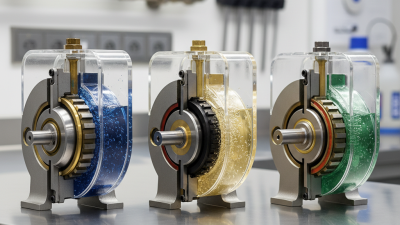
7 Vane Pump Buying Tips for Global Buyers
A vane pump can look straightforward in a catalog, yet the wrong choice may bring unstable flow, excess noise, or premature wear. Global buyers often compare prices across suppliers before checking whether each model suits the same duty. That comparison can mislead. A pump rated for one fluid, temperature, or pressure range may not perform well in another system.
Good buying decisions start with operating details. Record the required flow rate, working pressure, fluid viscosity, temperature range, and daily operating hours. Then confirm the pump’s materials, shaft configuration, port sizes, and motor requirements against your equipment. Ask suppliers for performance curves at your actual operating conditions, not just a peak-flow figure. Request clear information about tolerances, testing, spare parts, and warranty coverage. Small details matter.
Shipping distance and service access also affect the real cost. A low quotation may not include suitable packaging, documentation, or replacement components. Check the supplier’s stated production lead time and ask how technical questions are handled after delivery. Where possible, compare sample test reports and verify that specifications match the nameplate and purchase documents. This takes time. It can still prevent avoidable delays.
The seven tips in this guide help buyers assess performance, compatibility, supplier reliability, and long-term ownership costs. No checklist can replace application-specific engineering review. Some requirements may also remain unclear until the pump is tested in the actual system. That uncertainty deserves attention, not a guess.
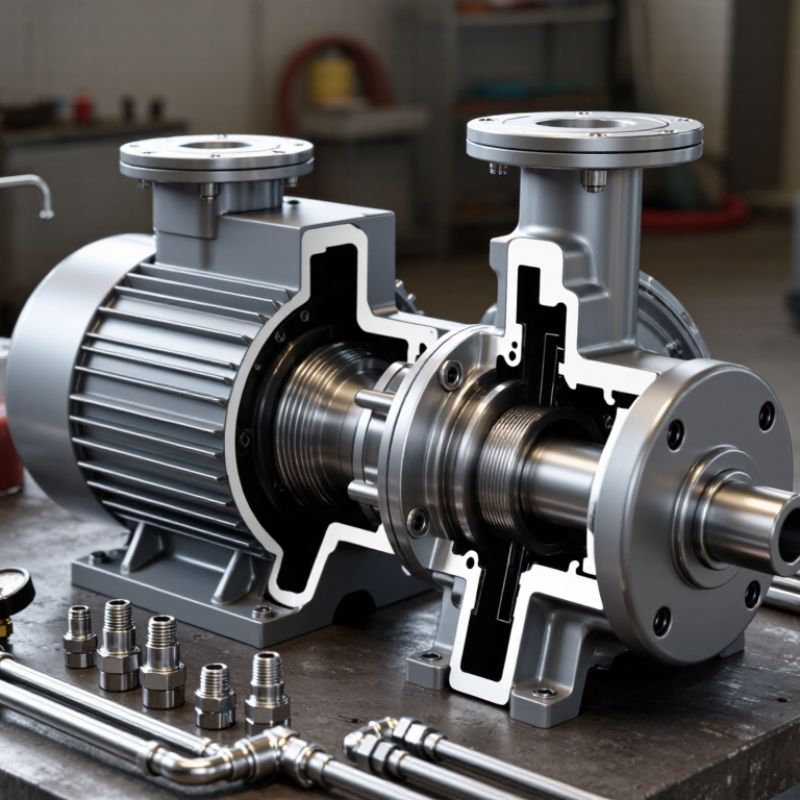
Define the Duty Point: Required Flow (L/min), Pressure (bar), and Speed (rpm)
A vane pump should be selected around its real duty point, not a headline maximum.
State required flow in L/min, working pressure in bar, and shaft speed in rpm together.
For a pump rated at 20 cm³/rev running at 1,500 rpm, theoretical flow is 30 L/min. Actual delivery will be lower because internal leakage rises with pressure and fluid temperature. Small errors matter.
Check the manufacturer’s performance curve at the intended speed, pressure, and oil viscosity. Measure it hot, if that reflects normal operation.
Pressure needs a clear definition: continuous operating pressure, not a brief peak. Include pressure losses across hoses, filters, and valves, plus any short pressure spikes during machine cycles.
Speed also matters; a variable-speed drive can change flow directly, while excessive speed may shorten service life. The U.S. Department of Energy’s Improving Pumping System Performance: A Sourcebook for Industry reports that pumping systems account for nearly 20% of global electricity demand. That figure covers many pump types, not vane pumps alone, but it underlines why avoiding oversized, inefficient operation is worthwhile.
Not just peak pressure. Record the machine’s actual flow and pressure under load where possible; estimates are useful, but they can be wrong.
Choose Fixed or Variable Displacement; Compare Common 70–210 bar Ratings
A vane pump’s pressure rating must match the real duty cycle, not just the machine’s maximum setting. Around 70 bar may suit steady, moderate-load circuits; 210 bar demands closer checks on fluid temperature, shaft speed, inlet conditions, and service life. Confirm whether the quoted rating is continuous or intermittent. The distinction matters. ISO 4409:2019 provides procedures for testing hydraulic pump performance under specified conditions, so compare test conditions alongside headline ratings. A catalog number alone is not enough.
Fixed displacement delivers a set volume per revolution, making it a straightforward choice for stable flows. If excess flow returns across a relief valve, however, energy becomes heat. A pressure-compensated variable-displacement design can reduce output as demand falls, though its control behavior and added cost need review. The U.S. Department of Energy’s Improving Pumping System Performance sourcebook estimates that pumping systems use nearly 20% of global electricity; that figure covers pumping systems broadly, not vane pumps alone. Still, it highlights why operating hours and load variation belong in the buying calculation. One detail is easy to miss: check the supplier’s pressure data against your fluid viscosity and expected temperature, then verify the unit under your actual operating conditions.
Verify Fluid Compatibility, Temperature Limits, and ISO 4406 Cleanliness Codes
A vane pump can tolerate a fluid that looks clean and still suffer from poor lubrication or seal swelling. Match the fluid chemistry to the pump’s metals, vane material, and elastomers; then check the supplier’s permitted temperature range. Water-glycol and synthetic fluids may need different seals from mineral oil. Hot oil also loses viscosity, while cold starts can make it too thick to fill the inlet quickly. Measure viscosity using ASTM D445, and compare it with the pump’s specified operating range. A number on a fluid label is not enough. Check the actual fluid.
ISO 4406:2021 expresses solid-particle contamination as three codes, counting particles per millilitre at thresholds of ≥4, ≥6, and ≥14 μm(c). For example, code 18/16/13 corresponds to about 1,300–2,500 particles at ≥4 μm(c), 320–640 at ≥6 μm(c), and 40–80 at ≥14 μm(c). Small counts matter. Use a particle-counter report from the reservoir or return line, not just a fresh-fluid certificate; contamination can enter during transfer and servicing. Then compare the result with the pump maker’s cleanliness target. ISO 11158 classifies mineral-oil hydraulic fluids, but classification alone does not confirm compatibility or cleanliness. A tidy code can still hide a temperature problem. Recheck both after the first operating hours.
7 Vane Pump Buying Tips for Global Buyers
Example ISO 4406 Cleanliness Class: Upper Particle-Count Limits
ISO 4406 reports particle counts per millilitre at sizes greater than 4, 6, and 14 µm(c). The bars show the upper boundary of the indicated code bands for an example 18/16/13 cleanliness class. This is not a universal vane-pump requirement: confirm the specified cleanliness target, fluid compatibility, and temperature limits with the pump manufacturer.
Match Mounting, Shaft, and Ports to ISO 3019-1 Interface Dimensions
7 Vane Pump Buying Tips for Global Buyers
Match Mounting, Shaft, and Ports to ISO 3019-1 Interface Dimensions
Before comparing pump capacity, confirm the mounting interface. ISO 3019-1 specifies inch-series dimensions for hydraulic pump and motor mounting flanges and shaft ends. It does not cover every pump interface, and it is not the metric-series part of the standard. Check the supplier’s drawing for the flange face, pilot diameter, bolt-circle dimensions, and shaft details. Small gaps matter. A pilot that seems close may still prevent proper alignment.
Then compare shaft diameter, usable length, and key or spline form with the driven equipment. Do not rely on a matching nominal size alone. Measure the coupling and check clearance behind the mounting face. Ports need separate attention: ISO 3019-1 does not define all port sizes, threads, or positions. Verify inlet and outlet connections, orientation, and sealing method on the pump drawing. A port can fit the hose yet sit too close to the frame. That detail is easy to miss. Even experienced buyers sometimes approve a catalog description before checking the dimensional drawing; it is worth slowing down here.
Compare Efficiency, Noise, and Service Data Using ISO 4409:2007 Test Methods
7 Vane Pump Buying Tips for Global Buyers
Compare Efficiency, Noise, and Service Data Using ISO 4409:2007 Test Methods
Global buyers should compare vane pumps using matched test sheets, not catalogue peaks. ISO 4409:2007 sets steady-state methods for measuring positive-displacement pump performance, including flow, pressure, speed, torque, and fluid temperature. It does not prescribe a universal efficiency grade.
Request readings at identical speeds and outlet pressures, with oil temperature and viscosity recorded. Compare volumetric and overall efficiency using the reported flow and shaft-input data. Small differences matter. The U.S. Department of Energy’s Improving Pumping System Performance: A Sourcebook for Industry cites pumping systems as consuming nearly 20% of global electricity. That broad estimate is not specific to vane pumps, but it puts avoidable losses in perspective.
Noise needs a separate controlled test. ISO 4409 does not set acoustic limits; request sound-power data measured under ISO 3744, with load, background noise, and test conditions stated. Check service records for operating hours, repeat repairs, and replacement-part lead times. A single clean bench result can flatter a pump. Ask for raw readings and repeatability data; pressure ripple or temperature drift may make field performance less impressive.