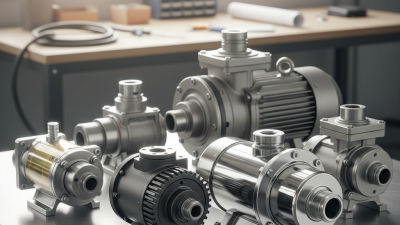
Top Oil Pump Manufacturers for Global Buyers
Choosing among the top oil pump manufacturers requires more than comparing prices or browsing attractive product catalogs. Global buyers need dependable flow, stable pressure, efficient motors, and documented quality. A pump may look suitable on paper, yet fail when crude oil thickens, temperatures rise, or suction lines become restricted.
Dr. Heinz P. Bloch, a recognized machinery reliability authority, stated, “Reliability is not a department; it is a way of life.” This principle matters when evaluating oil pumps for refineries, pipelines, marine systems, and industrial equipment. Manufacturers should demonstrate practical experience, not only polished marketing claims. Their records should include material specifications, factory testing, certification, spare-parts support, and responsive technical service.
Small details matter.
A buyer should examine pump construction, sealing methods, flow range, operating temperature, and compatibility with the intended oil. Cast iron may suit one application, while stainless steel or specialized alloys may perform better elsewhere. Energy consumption also deserves attention because inefficient equipment quietly increases operating costs over many years.
This guide compares leading oil pump manufacturers serving global buyers. It considers engineering capability, production consistency, customization, delivery reliability, and after-sales support. However, no ranking can replace site-specific evaluation. That is an uncomfortable limitation. A respected manufacturer can still be the wrong choice for a particular fluid, pressure profile, or installation environment.
The strongest suppliers explain those risks clearly. They provide evidence, admit technical boundaries, and help buyers select equipment that performs beyond the showroom.

Classify Oil Pumps by API 610, API 676, and API 674 Design Standards
Top Oil Pump Manufacturers for Global Buyers
Classifying oil pumps by API design standard helps buyers compare equipment without relying on marketing claims. API 610 covers centrifugal pumps for petroleum, petrochemical, and natural gas service. These pumps suit large flow rates, such as refinery transfer lines, but they require careful attention to cavitation, seal plans, and operating margins. The IEA’s Oil 2024 report projects global oil demand will reach about 105.4 million barrels per day by 2030. That scale increases pressure on pump reliability and maintenance planning.
API 676 covers rotary positive displacement pumps. They handle viscous fluids, controlled flow, and moderate pressure with steady torque. API 674 covers reciprocating positive displacement pumps, including plunger and piston designs. These pumps fit metering, injection, and high-pressure dosing duties. Selection should examine viscosity changes, pulsation control, material compatibility, and spare-part access. Small details matter.
A supplier’s experience should be tested through inspection records, performance curves, material certificates, and documented factory acceptance tests. The U.S. Energy Information Administration reports that refinery capacity and petroleum infrastructure remain significant across major producing and consuming regions. Buyers should therefore assess local service capability, not only purchase price. API compliance alone does not guarantee ideal operation. This distinction is often missed. Some specifications also become unnecessarily strict, increasing cost without improving field performance. The final decision should connect the API standard with actual fluid properties, duty cycles, and site conditions.
Compare Manufacturer Data on Flow Rate, Pressure, Head, and NPSH
Global oil-pump buyers should compare performance at identical operating conditions, not headline maximums. Flow rate must match the required production window, such as 120 m³/h at 40°C. Pressure should be listed in bar, while head should be shown in metres. These values are related, but oil density changes the conversion. For a heavier fluid, the same head creates higher pressure.
Check the duty point.
The U.S. Department of Energy’s Pump Life Cycle Costs guide reports that energy can exceed 40% of a pump’s total life-cycle cost. Therefore, a manufacturer offering a lower purchase price may create higher operating costs. Ask for efficiency curves, test tolerances, viscosity data, and performance records under ISO 9906 procedures. API 610 guidance also supports reviewing mechanical design, testing, and reliability for demanding petroleum service.
NPSH deserves careful attention. Compare NPSH required at the actual flow rate, temperature, and vapour pressure. Then calculate NPSH available from the tank, suction pipe, elevation, and losses. A large margin is useful, but excessive margin can increase equipment cost. I have seen comparison sheets list NPSHr at water conditions only. That can be misleading for viscous oil. A practical review should also check minimum stable flow, shutoff pressure, seal arrangement, and curve accuracy. Data sheets look precise. Field conditions rarely do.
Oil Pump Performance Benchmarks for Global Buyers
Representative industrial operating points for common oil-pump applications. The comparison covers flow rate, discharge pressure, developed head, and required NPSH. Values are model-neutral engineering benchmarks and may vary by fluid viscosity, temperature, speed, and system design.
Flow rate is shown in m³/h, pressure in bar, head in metres, and NPSH required in metres. Always verify final performance against the pump curve and the actual oil properties.
Verify API 610, ATEX, IECEx, and ISO 9001 Compliance Worldwide
When global buyers compare oil pump manufacturers, compliance should begin with evidence, not polished brochures.
API 610 matters for centrifugal pumps used in petroleum, petrochemical, and gas service. Ask for the exact edition, pump model, inspection records, and performance test results. A factory visit can reveal calibration labels, material traceability, and how technicians handle nonconformities. Small details matter. They often expose weak quality systems.
For hazardous locations, verify ATEX and IECEx documentation carefully.
Check the equipment group, category, EPL, gas or dust marking, certificate number, and temperature class. Confirm whether the motor, seal, junction box, and instruments have separate approvals. The certificate must match the actual configuration. “ATEX-ready” is not enough. Search the certificate number in the official IECEx database, where possible, and compare every technical parameter.
ISO 9001 supports consistent processes, but it does not guarantee perfect pump performance.
Review the certificate scope, issuing body, audit status, supplier controls, and corrective-action records. Request material certificates, factory acceptance test results, vibration readings, and pressure-test records. In practical sourcing, one document mismatch can delay customs clearance or site commissioning. It happens. Buyers should also check local electrical rules, service response times, spare-parts access, and whether technical files remain available after delivery.
Rank Suppliers by Lifecycle Cost, Lead Time, Service, and Warranty Terms
Global oil pump suppliers should be ranked by ownership value, not quotation price. The U.S. Department of Energy’s Pump Life Cycle Costs guide indicates that energy may represent about 40% of total pump ownership cost. Therefore, I would weight lifecycle cost at 40%, including efficiency, maintenance, spare parts, and downtime exposure. A cheaper pump can become expensive after years of continuous operation.
Lead time deserves 25% of the score.
Measure the promised shipment date against recent delivery records, not marketing language. Ask for stocked components, test schedules, export documents, and delay procedures. Even a seven-day delay can disrupt an offshore maintenance window. It happens.
Service receives 20%.
Strong suppliers provide commissioning support, vibration checks, technician availability, and clear escalation routes. Hydraulic Institute guidance also stresses proper pump selection, system conditions, and field verification, which many purchasing teams underestimate.
Warranty terms receive the remaining 15%.
Compare coverage duration, labor inclusion, exclusions, inspection rights, and replacement timing. A longer warranty is not automatically better. Read the fine print.
The International Organization for Standardization’s ISO 9906 testing framework can support objective performance acceptance, especially for flow, head, and efficiency claims. My scoring model is useful, but imperfect; local service capacity can outweigh a slightly better efficiency figure. Buyers should record actual response times after installation, then revise supplier rankings annually. Loose records weaken even a careful procurement decision.