231-941-0215 sale@namkeenmachine.com 2707 Aero Park Drive Traverse City, MI
Eng
  • Eng
  • Deu
  • Fra

Why Choose Oil Pumps for Industrial Applications?

Why Choose Oil Pumps for Industrial Applications?

Oil pumps are essential wherever machines need controlled lubrication, cooling, transfer, or pressure management. They move oil through narrow passages, bearings, gears, hydraulic circuits, and heat exchangers. In a busy plant, that flow may protect a steel mill gearbox running continuously under heavy loads. It may also support a compact compressor operating beside a dusty production line.

The main advantage of oil pumps is controlled delivery. Unlike gravity-fed systems, they can maintain more consistent flow across changing speeds and temperatures. This helps reduce friction, heat, and premature wear. Positive-displacement designs are especially valuable when stable pressure matters. Centrifugal models can suit higher-flow applications with lower viscosity oil. The selection is not automatic. Viscosity, contamination, seal design, operating temperature, and required pressure must be checked together.

Reliability engineer Heinz P. Bloch offers a useful principle: “Reliability is designed into machinery, not inspected into it.” That idea applies directly to oil pumps. A pump cannot compensate for an undersized line, dirty oil, poor alignment, or neglected filtration. Small details matter. A clogged suction strainer can starve the pump within minutes. A worn coupling can create vibration that spreads through the entire assembly.

Oil pumps are powerful tools, but they are not perfect solutions. They consume energy, require inspection, and may fail when maintenance becomes reactive. Engineers should compare lifecycle cost, accessibility, redundancy, and monitoring needs before choosing a model. The best decision is practical, evidence-based, and sometimes less impressive than expected. A simpler pump, correctly matched and maintained, may outperform a sophisticated system installed without enough operating discipline.
Why Choose Oil Pumps for Industrial Applications?

What Is an Industrial Oil Pump?

Why Choose Oil Pumps for Industrial Applications?

What Is an Industrial Oil Pump?

An industrial oil pump moves oil through controlled pressure and flow. It supports lubrication, cooling, filtration, and hydraulic operation. Unlike a household pump, it may run continuously beside hot machinery, fine particles, and changing loads.

Most oil pumps use positive displacement principles. Internal gears, screws, or pistons trap oil and push it forward. This design suits viscous fluids and steady delivery. Relief valves protect the system when discharge pressure rises unexpectedly. In field inspections, technicians often check vibration, seal leakage, temperature, and pressure before blaming the pump.

The U.S. Department of Energy reports that pumping systems can consume 25% to 50% of industrial facility electricity. That figure makes pump efficiency a practical cost issue, not just an engineering preference. Correct sizing can reduce bypass flow and unnecessary motor demand. Viscosity also matters. Cold oil needs more driving force and can increase startup stress.

A perfect selection is rare.

Engineers should verify viscosity ranges, operating temperatures, contamination levels, and required flow rates. ISO and API guidance provides useful design references, but real equipment conditions may differ from laboratory assumptions. A pump that performs well with clean oil may struggle with aeration or abrasive particles. That is why operating records and maintenance experience remain essential.

Why Choose Oil Pumps for Industrial Applications?

Industrial oil pumps are selected according to lubricant viscosity, required flow, pressure, and operating temperature. The chart shows common ISO VG lubricant grades and their nominal kinematic viscosity at 40°C.

Higher-viscosity oils generally require pumps designed to handle greater resistance to flow. ISO VG values are standardized nominal viscosity grades defined by ISO 3448.

How Do Oil Pumps Work in Industrial Systems?

How Do Oil Pumps Work in Industrial Systems?

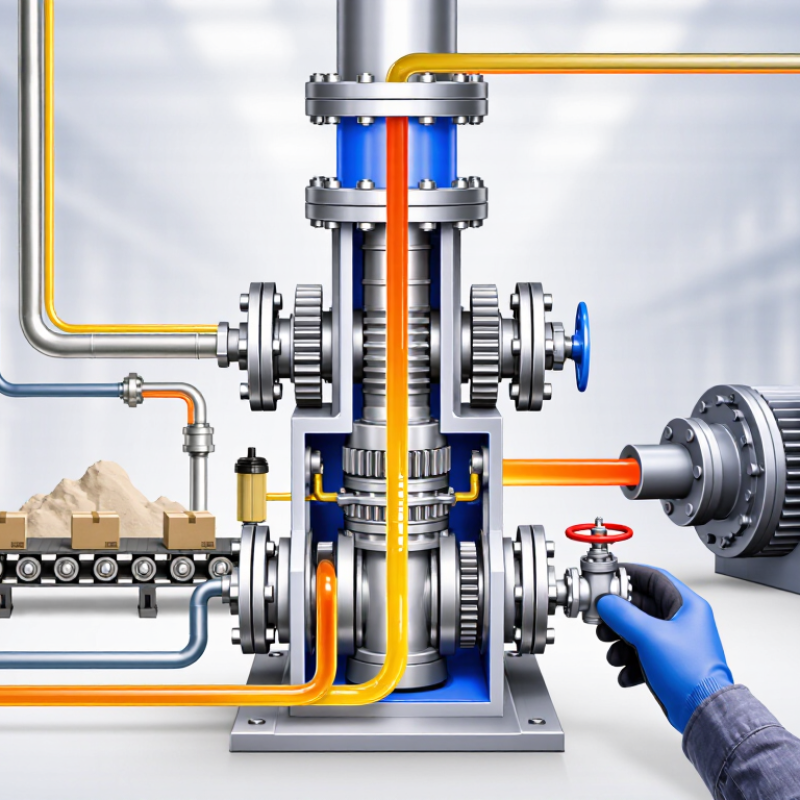
Oil pumps move lubricating or process oil through a controlled circuit. Inside the pump, rotating gears, screws, or vanes create low pressure at the inlet. Atmospheric or tank pressure then pushes oil into the chamber. Rotation carries the fluid forward, while the outlet releases it at a controlled pressure. This steady movement can lubricate bearings, cool hot surfaces, or operate hydraulic components.

The details matter. Viscosity, temperature, clearance, and operating speed change pump performance. The U.S. Department of Energy reports that pumping systems may represent nearly 20% of industrial motor energy use, depending on the facility and process (DOE, Improving Pumping System Performance). IEA data also indicates that electric motor systems consume about 53% of global electricity, making efficient pump operation an important industrial concern (IEA, Energy Efficiency 2023). An oil pump running against excessive resistance wastes energy and increases heat.

In field inspections, technicians often check pressure gauges, filter condition, vibration, and oil temperature together. One reading rarely explains the whole problem. A worn seal may reduce flow before failure becomes visible. A poorly sized pump can also cycle too often. No pump is perfect. Regular measurement, correct oil selection, and realistic maintenance intervals usually provide better results than maximum pressure alone. Thermographic checks can reveal hot bearings, while flow testing confirms whether the system performs under real operating conditions.

Which Types of Oil Pumps Suit Different Applications?

Why Choose Oil Pumps for Industrial Applications?

Choosing the right oil pump depends on viscosity, pressure, temperature, and flow stability. Gear pumps suit thick oils, lubricants, and steady metering. Their simple construction handles demanding duty, but tight clearances require clean fluid. Screw pumps deliver smooth, low-pulsation flow for fuel transfer and lubrication systems. They also perform well across changing viscosities. Vane pumps fit moderate-pressure applications where compact equipment and controlled flow matter. Piston pumps are stronger choices for high-pressure injection, hydraulic service, and precise dosing. Centrifugal pumps can move large volumes efficiently, but they usually need lower-viscosity fluids and stable operating conditions.

The International Energy Agency reports that electric motor systems consume about 53% of global electricity. Pump selection therefore affects more than fluid movement. Oversized motors, excessive bypass flow, and poor suction design can quietly increase operating costs. Hydraulic Institute guidance recommends operating pumps near their best efficiency point. In practice, this target is often missed. Real plants face dirty filters, fluctuating tank levels, and inconsistent maintenance. I would verify the duty point with measured data, not only the original design sheet.

Tips: Check viscosity at actual operating temperature. Confirm suction pressure and vapor margin. Compare lifecycle energy costs, not purchase price alone. Install pressure and flow gauges near the pump. Review vibration and seal leakage regularly. A small field test can challenge an attractive calculation.

What Benefits Do Oil Pumps Provide for Industry?

Oil pumps provide controlled flow, reliable lubrication, and stable heat transfer in demanding industrial environments. They serve hydraulic units, compressors, gearboxes, and thermal systems. In a steel plant, a correctly selected oil pump can keep bearings supplied while hot oil moves through a cooler. This reduces friction, temperature spikes, and unplanned stoppages. The U.S. Department of Energy reports that pumping systems may consume 25–50% of a facility’s electricity. Its industry guidance also identifies potential energy savings of 20–50% through better system design and maintenance.

The benefits extend beyond energy use. Oil pumps can deliver steady pressure, handle viscous fluids, and protect equipment during long operating cycles. They also support measurable maintenance routines. Operators can track discharge pressure, motor current, oil temperature, and vibration. These readings reveal clogged filters or worn bearings before failure occurs. However, oil pumps are not automatically efficient. An oversized pump may create excess heat, noise, and bypass losses. A poorly aligned coupling can waste energy quietly. This is where practical experience matters, because a catalogue rating cannot reflect every pipe bend or temperature change. DOE pumping-system guidance and Hydraulic Institute life-cycle cost methods both encourage evaluating operating costs, not only purchase prices.

Tips: Match pump capacity to real demand. Check viscosity at operating temperature. Inspect seals, filters, and couplings regularly. Record pressure trends weekly. A small spreadsheet may expose large losses. Review the design when production changes.

How Should Industrial Oil Pumps Be Selected and Maintained?

Why Choose Oil Pumps for Industrial Applications?

How Should Industrial Oil Pumps Be Selected and Maintained?

Oil pumps provide stable flow under demanding industrial conditions. Positive-displacement designs handle viscous fluids and maintain pressure during variable production cycles. Selection should begin with viscosity, flow rate, discharge pressure, temperature, and duty cycle. Confirm fluid compatibility with seals, bearings, and housing materials. Do not size the pump from flow rate alone. That shortcut causes trouble.

The U.S. Department of Energy’s Improving Pumping System Performance sourcebook reports that pumping systems may consume 25–50% of a facility’s electricity. The European Commission’s Ecodesign preparatory study also identifies pumps as a major share of industrial motor-system demand. Efficiency matters. Select a pump near its best operating range, then verify suction conditions and available NPSH.

Maintenance should follow operating evidence, not only calendar dates. Inspect coupling alignment, seal leakage, unusual noise, and bearing temperature during routine rounds. Record vibration and discharge pressure before problems become visible. Filter contamination can quietly damage clearances. Oil analysis may reveal particles, water, or thermal stress. ISO 14224 supports structured reliability data collection, but many plants still record symptoms inconsistently. That weakness deserves attention.

A practical maintenance plan includes lubrication checks, strainer cleaning, torque verification, and spare-seal control. Keep one baseline reading after commissioning. Compare future readings against it. Small deviations can be meaningful. A pump that runs smoothly today may still be oversized, poorly throttled, or operating away from its design point.

Why Choose Oil Pumps for Industrial Applications? - How Should Industrial Oil Pumps Be Selected and Maintained?

Typical selection and maintenance reference for industrial oil-pumping systems. Actual performance depends on fluid properties, system design, and operating conditions.
Pump Type Typical Flow Range Typical Pressure Range Suitable Oil Viscosity Main Advantages Common Industrial Uses Important Selection Considerations
External Gear Pump Approximately 1–300 L/min Approximately 10–250 bar Low to high viscosity; commonly used from about 10–10,000 cSt Compact construction, steady displacement, good pressure capability, and relatively simple maintenance Lubrication systems, fuel transfer, hydraulic power units, oil circulation, and metering Check required pressure, fluid temperature, viscosity at start-up, allowable speed, and risk of abrasive contamination
Internal Gear Pump Approximately 5–1,500 L/min Approximately 5–250 bar Low to very high viscosity; often suitable from about 10–100,000 cSt Low pulsation, good suction capability, and effective handling of viscous fluids Heavy oil transfer, bitumen service, polymer processing, paint, adhesives, and lubrication circulation Confirm cold-start torque, heating requirements, seal compatibility, and minimum inlet pressure
Twin-Screw Pump Approximately 10–3,000 L/min Approximately 5–100 bar Broad range, commonly about 1–100,000 cSt depending on design Low pulsation, good suction performance, gentle handling, and capability for multiphase or lubricating fluids Oil terminals, marine cargo systems, refinery transfer, process circulation, and filtration systems Evaluate gas content, solids, axial thrust, seal arrangement, and the required flow at minimum and maximum viscosity
Three-Screw Pump Approximately 5–2,000 L/min Approximately 5–100 bar Typically about 10–10,000 cSt Very low pulsation, quiet operation, and strong suitability for clean lubricating oils Turbine lubrication, compressor lubrication, hydraulic oil circulation, and fuel oil systems Maintain clean fluid, verify minimum viscosity, prevent dry running, and confirm the required differential pressure
Sliding Vane Pump Approximately 5–500 L/min Approximately 3–35 bar Low to medium viscosity; commonly about 1–1,000 cSt Good volumetric efficiency, reversible flow options, and convenient transfer performance Fuel transfer, loading and unloading, solvent handling, and general oil transfer Check vane wear, fluid lubricity, maximum speed, pressure relief protection, and compatibility with dry-running conditions
Centrifugal Pump Approximately 20–10,000 L/min Approximately 1–40 bar Best for low-viscosity oils, commonly below about 100–200 cSt High flow capacity, continuous operation, and straightforward integration into large circulation systems Cooling circuits, low-viscosity oil circulation, tank transfer, and large-volume process systems Account for viscosity-related performance loss, net positive suction head, cavitation risk, and required flow stability
Maintenance Activity Recommended Frequency What to Check Purpose
Visual and Operating Inspection Each shift or daily Leaks, unusual noise, vibration, temperature, pressure, flow, and motor current Identify early signs of seal failure, cavitation, blockage, misalignment, or overload
Filter and Strainer Inspection Weekly to monthly, depending on contamination level Differential pressure, clogging, damaged elements, and accumulated particles Protect gears, screws, vanes, bearings, seals, and downstream equipment
Lubrication and Bearing Check Monthly or according to the equipment manual Lubricant level, grease condition, bearing temperature, and abnormal wear Reduce friction, heat generation, and premature bearing failure
Alignment and Coupling Inspection Quarterly and after major maintenance Shaft alignment, coupling condition, soft foot, and foundation bolts Limit vibration, coupling wear, seal damage, and shaft loading
Performance Verification Every 3–6 months or after process changes Flow rate, discharge pressure, suction condition, power consumption, and volumetric efficiency Detect internal wear, bypassing, incorrect operating points, and energy losses
Seal and Gasket Replacement Condition-based or during planned overhaul Mechanical seal faces, packing, O-rings, gaskets, and leakage rate Prevent product loss, air ingress, environmental release, and contamination
Selection rule: Select the pump using the required flow, differential pressure, oil viscosity across the full temperature range, suction conditions, fluid cleanliness, operating speed, material compatibility, and applicable safety requirements. Always confirm final limits with the pump manufacturer’s technical documentation.