- Eng
- Deu
- Fra
What Are the 10 Best Industrial Vacuum Blowers?
Choosing the best industrial vacuum blower requires more than comparing motor power or airflow figures. In real facilities, performance depends on dust type, hose length, filter resistance, operating hours, and available electrical capacity. A blower that performs well in a clean workshop may struggle beside a cement mixer or metal-cutting line. Small details matter.
This guide examines ten industrial vacuum blowers through practical criteria, including suction strength, airflow stability, energy efficiency, noise levels, filtration, maintenance access, and build quality. It also considers manufacturer documentation, service support, warranty terms, and results reported by experienced operators. Numbers alone can mislead. A high-pressure rating may not guarantee dependable collection through a long hose. Likewise, a quieter unit may sacrifice capacity under heavy loads.
The comparison focuses on equipment suitable for demanding commercial and industrial environments. Each model should be assessed against its intended material, duty cycle, and workplace conditions. Safety features deserve equal attention, especially thermal protection, grounding, spark control, and dust containment. Requirements can vary by region, so buyers should verify current local standards before installation.
Some rankings remain subjective. Budget, space, and maintenance skill can change the final choice. That is worth admitting. This overview aims to provide a careful starting point, not an absolute verdict. Whether you need continuous extraction or occasional cleanup, the right industrial vacuum blower should deliver stable performance without creating unnecessary operating costs. Reliability is proven over time.
Industrial Vacuum Blowers: Definition, Purpose, and Operating Principles
Industrial Vacuum Blowers: Definition, Purpose, and Operating Principles
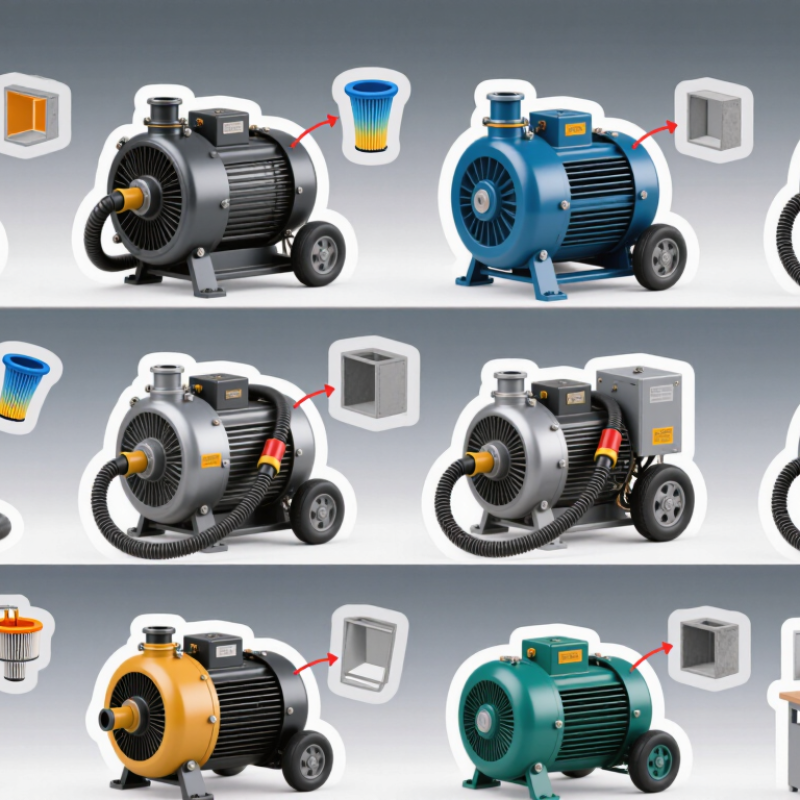
Industrial vacuum blowers are machines that move large air volumes through pipes, filters, and collection systems. They create a pressure difference, allowing air to carry dust, chips, moisture, or process debris into a separator. Unlike ordinary fans, these blowers handle higher resistance and continuous industrial workloads. Common designs include positive displacement and centrifugal units. Positive displacement models deliver steady airflow, while centrifugal models often suit systems requiring changing flow conditions. Selection depends on airflow, vacuum pressure, material density, temperature, and operating hours.
The blower’s motor turns an impeller or rotor inside a controlled housing. As air enters, the rotating component accelerates or compresses it. Downstream filters then capture particles before cleaner air leaves the system. Poorly matched filters can restrict airflow and raise energy use. I have found that many performance problems begin with blocked hoses, not the blower itself. The system works as one machine. A powerful unit cannot compensate for undersized piping or careless maintenance.
Tips: Check airflow and static pressure together. Inspect filters before changing blower settings. Listen for sharp rattling sounds. They may indicate imbalance or worn bearings. Keep inlet temperatures within the equipment specification. Record pressure readings during normal operation. This creates useful evidence when performance changes. No blower is perfect. A slightly conservative selection may provide better reliability than chasing maximum capacity.
What Are the 10 Best Industrial Vacuum Blowers? - Industrial Vacuum Blowers: Definition, Purpose, and Operating Principles
| Rank | Blower Type / Configuration | Operating Principle | Typical Airflow Range | Typical Vacuum Range | Typical Power | Best Application | Main Advantage | Important Limitation |
|---|---|---|---|---|---|---|---|---|
| 1 | Three-Lobe Positive Displacement Blower | Counter-rotating lobes trap and move fixed air volumes without internal contact. | 500–12,000 m³/h | Up to approximately 1.0 bar vacuum | 5.5–250 kW | Pneumatic conveying and wastewater aeration | Reliable fixed displacement and easy maintenance | Pulsating airflow and higher noise without acoustic treatment |
| 2 | Screw Vacuum Blower | Intermeshing helical rotors compress and transport air continuously. | 300–6,000 m³/h | Up to approximately 0.8 bar vacuum | 7.5–200 kW | Continuous conveying and process vacuum | Smooth airflow and high energy efficiency | Higher purchase cost and more specialized servicing |
| 3 | Regenerative Side-Channel Blower | A high-speed impeller repeatedly accelerates air through a side channel. | 50–2,000 m³/h | Up to approximately 0.6 bar vacuum | 0.4–30 kW | Light material handling, lifting, and packaging | Oil-free operation and compact construction | Lower efficiency at high pressure differentials |
| 4 | Multi-Stage Centrifugal Blower | Several impeller stages add velocity and pressure to a continuous air stream. | 500–10,000 m³/h | Up to approximately 0.7 bar vacuum | 5.5–250 kW | Aeration, drying, and large-volume suction | High airflow with low mechanical contact | Requires clean inlet air and adequate surge protection |
| 5 | Direct-Drive Turbo Blower | A high-speed motor drives a centrifugal impeller directly, minimizing transmission losses. | 1,000–20,000 m³/h | Up to approximately 0.5 bar vacuum | 15–400 kW | Large-scale aeration and continuous process air | High efficiency and variable-speed control | Sensitive to operating outside its design range |
| 6 | Liquid-Ring Vacuum Blower | An eccentric impeller forms a rotating liquid ring that compresses and moves gas. | 100–5,000 m³/h | Up to approximately 0.95 bar vacuum | 3–160 kW | Wet, humid, or condensable gas service | Handles moisture and contaminated gas well | Requires seal liquid management and may consume water |
| 7 | Rotary Vane Vacuum Blower | Eccentrically mounted vanes create expanding and compressing chambers inside a rotor housing. | 20–1,500 m³/h | Up to approximately 0.99 bar vacuum | 1.5–75 kW | Deep vacuum, lifting, and laboratory-process equipment | Strong vacuum performance in a compact package | Vane and oil maintenance can be significant |
| 8 | Dry Claw Vacuum Blower | Non-contact claw-shaped rotors transport and compress air in a dry chamber. | 50–1,500 m³/h | Up to approximately 0.8 bar vacuum | 2.2–75 kW | Food, medical, and clean manufacturing processes | Oil-free gas path and low routine maintenance | Performance declines with dirty or abrasive inlet air |
| 9 | Air-Cooled Regenerative Vacuum Blower | A radial impeller circulates air through one or more pressure-generating channels. | 80–1,800 m³/h | Up to approximately 0.5 bar vacuum | 0.75–30 kW | Vacuum tables, printing, and automated handling | Simple installation and no operating oil | Heat buildup may limit continuous operation at high load |
| 10 | High-Pressure Centrifugal Blower | A shaped impeller converts rotational energy into high-velocity, pressurized airflow. | 1,000–50,000 m³/h | Up to approximately 0.3 bar vacuum | 4–500 kW | Ventilation, fume extraction, and combustion air | Very high airflow for low-to-moderate pressure duties | Not suitable for deep vacuum or high pressure differentials |
Note: Performance ranges are representative engineering ranges. Actual airflow, vacuum level, power consumption, noise, and efficiency depend on blower size, speed, inlet conditions, gas composition, altitude, system resistance, and operating temperature.
Related Posts
-
Why Choose an Industrial Vacuum Blower?
-
China Top Vacuum Blower Pump Manufacturers 2026?
-
What is a Vacuum Blower Pump and How Does It Work in Industry
-
How to Choose the Right High Vacuum Pump for Your Industrial Needs
-
How to Choose the Best Heavy Duty Vacuum Pump for Your Needs?
-
10 Best High Vacuum Pumps for Your Industrial Needs?