- Eng
- Deu
- Fra

What Is a Septic Pump and How Does It Work?
A septic system often works quietly beneath a lawn, until wastewater stops moving as it should. Septic pumps help move wastewater from a tank or pump chamber toward a drainfield, especially when gravity alone cannot carry it there. Not every property needs one. The site’s slope, system design, and wastewater load all matter.
A practical paraphrase of Ohio State wastewater specialist Karen Mancl’s published guidance is: “A septic system performs best when its design fits the property and receives regular care.” This is a paraphrase, not a verified verbatim quotation. The principle applies to pumps, too. Inside a typical pump chamber, a float switch rises with the wastewater and activates the pump. The pump then sends the liquid through a discharge pipe. When the level falls, the switch turns the pump off. A high-water alarm may warn of trouble.
Small details matter. A blocked float, failed switch, or clogged pipe can interrupt the cycle. You might notice an alarm, wet ground, or slow drains—but those signs do not identify the fault by themselves. A qualified septic professional can inspect the equipment and explain what the system needs. Do not assume every pump is a grinder pump; pump types and configurations differ.
Still, a pump is not magic. Routine inspection helps catch wear before a failure becomes an unpleasant surprise. Maintenance intervals depend on the system and local guidance. The imperfect part is that homeowners may not know their pump’s age or type. A clear service record can help fill that gap.
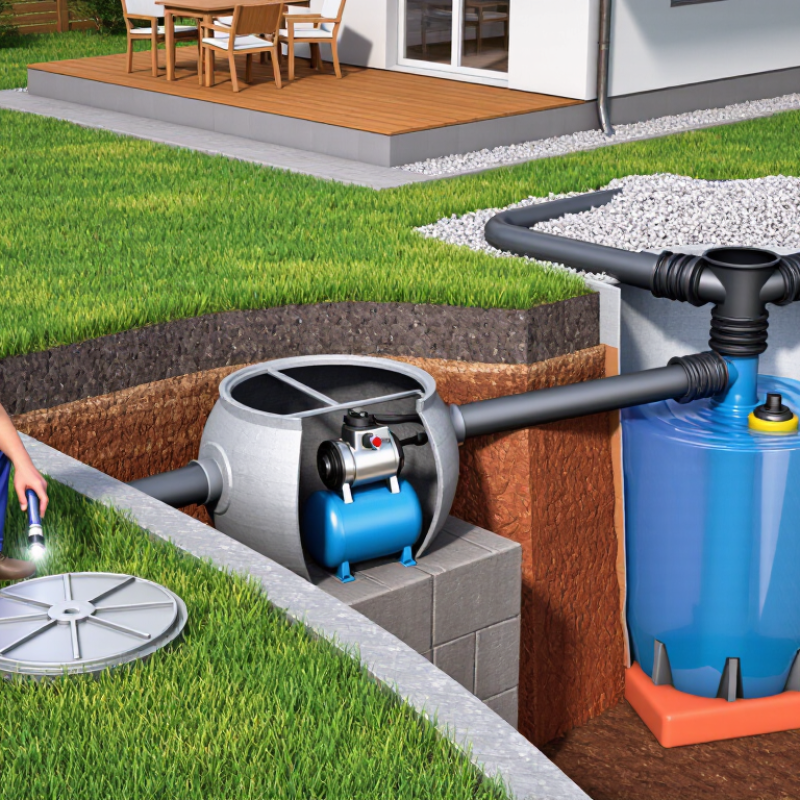
What a Septic Pump Is and Its Role in a Wastewater System
A septic pump moves wastewater from a tank or pump chamber to a drainfield when gravity cannot provide enough flow. It is not included in every septic system. In a typical pumped setup, settled liquid enters the chamber, and a float switch starts the pump when the level rises. The pump sends effluent through a discharge pipe toward the treatment area. Solids should remain in the tank, not be routinely pushed through the pump.
The U.S. Environmental Protection Agency reports that more than one in five U.S. households use septic or other decentralized wastewater systems (EPA, “Septic Systems Overview”). That scale makes reliable pumping important, especially on sloped lots or where the drainfield sits above the tank. A high-water alarm can warn occupants when the pump fails or cannot keep up. A warning is useful. Ignoring it can lead to backups or wastewater surfacing near the field.
The pump depends on working floats, clear electrical connections, and an unobstructed discharge line. EPA’s SepticSmart guidance recommends inspecting septic systems every one to three years and pumping tanks every three to five years, with timing adjusted for household size, tank capacity, and water use. Those intervals are not a guarantee; actual conditions vary. A service record helps, though people sometimes forget to update it. That small omission can matter.
| System part or feature | What it does | How it relates to the septic pump | Practical note |
|---|---|---|---|
| Septic pump | A motor-driven pump that moves wastewater from a lower point to a higher point or to a location that cannot be reached by gravity alone. | It provides the force needed to transfer wastewater or clarified effluent through a discharge pipe. | Not every septic system needs a pump; many systems rely on gravity. |
| Septic tank | Receives household wastewater and allows solids to settle while fats, oils, and grease rise to form a scum layer. | In a pumped system, liquid leaving the tank or a downstream pump chamber is moved onward by the pump. | The pump does not replace the tank’s settling and treatment functions. |
| Pump chamber | A watertight chamber that temporarily holds wastewater or treated effluent before discharge. | The pump is installed in or connected to this chamber and starts when the liquid reaches its activation level. | Access covers should remain secure and accessible for inspection and service. |
| Float switch or level control | Detects liquid level and controls when the pump starts and stops. | When the liquid reaches the set level, the switch signals the pump to run; it stops after the level falls. | A stuck or damaged float can prevent pumping or cause repeated operation. |
| Discharge pipe | Carries pumped wastewater or effluent away from the chamber. | The pump pressurizes the liquid so it can travel through the pipe to the next treatment or dispersal point. | Pipe size, route, elevation, and system design affect the pump required. |
| Check valve | Allows flow in one direction and helps limit wastewater from flowing back into the chamber after the pump stops. | It is commonly installed on the discharge line where required by the system design. | Valve condition matters because backflow can cause extra pump cycles. |
| High-water alarm | Warns occupants when liquid in the chamber rises above its normal operating level. | It can alert the household to a pump, power, float, or flow problem before an overflow occurs. | An alarm is a warning, not a substitute for prompt inspection and repair. |
| Effluent pump | Moves clarified liquid, typically from a pump chamber after solids have been retained or settled upstream. | It is used when effluent must be lifted or delivered under pressure, such as to a designed dispersal system. | It is not intended to handle large amounts of raw sewage solids. |
| Sewage ejector or solids-handling pump | Moves wastewater containing solids in installations designed for that purpose. | It may be used where raw sewage must be pumped, such as from a lower-level plumbing fixture to a higher sewer line or treatment point. | Its application differs from an effluent pump; the correct type depends on the system design. |
| Typical operating cycle | Liquid enters the chamber, the level rises, the control activates the pump, and the liquid is discharged. | The pump stops when the level reaches its shutoff point; the chamber then begins filling again. | Frequent cycling, unusual noises, or a persistent alarm can indicate a problem. |
| Power and maintenance | Most septic pumps require electricity and have mechanical parts that can wear or become obstructed. | A power interruption or pump failure can stop wastewater transfer and raise the chamber level. | Follow the system designer’s and local health authority’s inspection and maintenance guidance. |
Related Posts
-

China Top 10 Septic Pumps Suppliers for Global Buyers
-
China Best Septic Pumps for Global Buyers?
-
Understanding the Importance of Septic Vacuum Pumps for Effective Waste Management Systems
-
Best Septic Vacuum Pump for Efficient Waste Management?
-
Best Septic Vacuum Pump Options for Efficient Waste Management?
-
How to Choose a Septic Vacuum Pump?