- Eng
- Deu
- Fra

What Is an Aircraft Air Starter Unit?
An Aircraft Air Starter Unit is a compact pneumatic device that helps start an aircraft engine. It converts compressed air into mechanical rotation. This rotation turns the engine’s compressor before fuel ignition begins.
The air source may come from an auxiliary power unit, ground cart, or another operating engine. Inside the unit, airflow drives a turbine. A reduction gearbox then transfers torque to the engine accessory gearbox. The starter must deliver strong, controlled power for several seconds. It also disengages automatically after the engine reaches self-sustaining speed.
Small details matter. Technicians inspect air lines, couplings, seals, lubrication, and starter valves during maintenance. Unusual noise, slow acceleration, or excessive vibration can indicate internal wear. A reliable inspection follows the aircraft maintenance manual and approved service data. Practical experience also shows that contamination can affect performance, even when the starter appears clean externally.
It is not just an air motor.
This article explains how an Aircraft Air Starter Unit works, where its compressed air comes from, and why its design supports dependable engine starts. It also examines common components, operating limits, maintenance concerns, and differences between pneumatic and electric starting systems. Some descriptions may seem straightforward, but real aircraft systems vary by engine model. That variation deserves careful attention. A simplified explanation can help readers understand the equipment, yet it should never replace certified procedures or professional judgment.
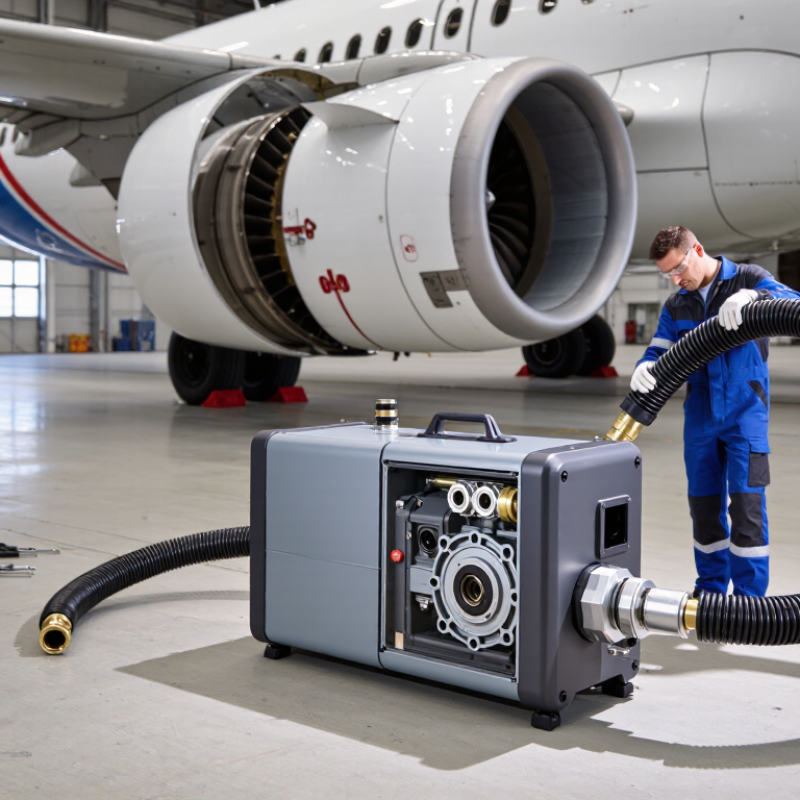
Definition and Purpose of an Aircraft Air Starter Unit
An aircraft air starter unit is a pneumatic device that spins an engine during startup. It converts compressed air into mechanical rotation through a small turbine and gearbox. The starter engages the engine shaft until combustion becomes self-sustaining. Then, it disengages.
Its purpose is practical. It delivers strong starting torque without placing excessive demand on the aircraft’s electrical system. Compressed air may come from an auxiliary power unit, a ground air cart, or another operating engine. This flexibility matters at remote stands and during repeated maintenance checks. The International Civil Aviation Organization reported more than 4.3 billion air passengers in 2023, showing the scale of operations that depend on reliable engine starts. One failed starter can delay an aircraft, even when every other system appears ready.
Maintenance teams inspect the air motor, seals, bearings, clutch, and gearbox. They also check air pressure and abnormal vibration. The Federal Aviation Administration’s 2024 aviation forecast expects continued fleet growth, increasing pressure on dependable starting equipment. Yet, the unit is sometimes treated as a simple accessory. That view is incomplete. Contamination, moisture, or poor lubrication can shorten service life. Field experience also shows that a clean inspection does not always predict perfect performance. Small defects can appear only under load. That uncertainty deserves attention.
What Is an Aircraft Air Starter Unit? - Definition and Purpose of an Aircraft Air Starter Unit
| Data Dimension | Typical Value or Description | Definition and Purpose |
|---|---|---|
| Component Type | Pneumatic turbine starter | An aircraft air starter unit is a compact turbine-driven starting device that converts compressed air energy into mechanical rotation for turning an aircraft engine during startup. |
| Primary Function | Initial engine rotation | The unit rotates the engine compressor or accessory gearbox until the engine reaches a speed at which fuel ignition and self-sustaining operation can occur. |
| Compressed-Air Sources | Ground air cart, auxiliary power unit, or cross-bleed air | Compressed air may be supplied by a pneumatic ground cart, the aircraft auxiliary power unit, or another operating engine through the aircraft bleed-air system. |
| Typical Starter Air Pressure | Approximately 30–45 psig (2.1–3.1 bar) at the starter inlet | This is a common operating range for many pneumatic aircraft starting systems. The approved pressure range varies according to the aircraft and engine design. |
| Energy Conversion | Compressed air to shaft torque | Air expands through a turbine wheel, producing torque that is transmitted through reduction gearing and an output shaft to the engine starting pad. |
| Drive Connection | Engine accessory gearbox or dedicated starter pad | The starter is mechanically connected to the engine through a drive shaft, clutch, and gear train. This arrangement allows the starter to rotate the engine without remaining engaged during normal operation. |
| Starter Cutout | Usually at a specified compressor speed, commonly around 40–55% of the relevant engine spool speed | At the scheduled cutout speed, the starter control valve closes and the overrunning clutch disengages so the engine can continue operating without driving the starter. |
| Control System | Starter control valve, start switch, and speed-sensing logic | The control system regulates airflow to the starter, coordinates fuel and ignition commands, and removes starter air when the engine reaches the required speed. |
| Overrunning Clutch | One-way mechanical clutch | The clutch transmits torque from the starter to the engine during starting and prevents the running engine from back-driving the starter after disengagement. |
| Typical Operating Duration | Usually limited to a short start cycle, often about 30–90 seconds | Time limits protect the starter from overheating and excessive mechanical stress. A cooling period may be required before another start attempt. |
| Installation Location | Engine accessory gearbox or engine starting interface | The unit is mounted where it can transfer torque directly to the engine core or compressor while remaining accessible for inspection and maintenance. |
| Advantages | High starting torque, low electrical demand, and suitability for large turbine engines | Pneumatic starters can deliver substantial torque from stored or generated air and are widely used where an electric starter would be too heavy or would require excessive battery power. |
| Common Applications | Turbofan, turbojet, turboprop, and turboshaft engines | Air starter units are used across many gas-turbine aircraft propulsion systems, although the exact starter configuration depends on the engine and aircraft architecture. |
| Key Maintenance Checks | Air leakage, rotor condition, clutch operation, lubrication, and starter-valve performance | Inspection focuses on reliable airflow, turbine and bearing condition, proper clutch engagement, correct lubrication, and compliance with the applicable maintenance instructions. |
Note: Pressure values, cutout speeds, operating times, and installation details are representative industry ranges. The aircraft maintenance manual and engine manufacturer’s approved documentation always take precedence for a specific system.