Selecting an oil vacuum pump is not just a matter of chasing the lowest price or the deepest vacuum rating. Global buyers must match pump performance to the process, operating schedule, and service conditions. This guide compares ten options across practical criteria, including pumping speed, ultimate pressure, duty cycle, noise, and maintenance needs. Those figures matter, but the application matters more.
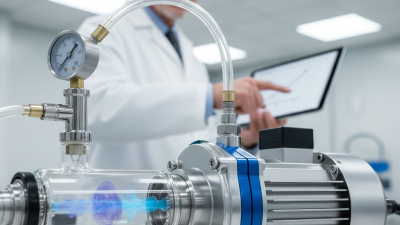
Details at the machine can reveal a lot. Check the oil sight glass, exhaust filter, inlet connection, and access to routine service parts. A pump that runs steadily during a short test may behave differently after hours of continuous use. Ask manufacturers for current datasheets, clear warranty terms, and confirmation of voltage and frequency compatibility before ordering. Local support can also affect downtime, especially when replacement oil or seals are not readily available. No shortlist is perfect. Model specifications and availability can change, and a technically strong unit may still be a poor fit for a small workshop. The comparisons ahead are intended to help buyers ask better questions—not to replace application-specific engineering advice. A low purchase price can look compelling, though ownership costs sometimes tell a less tidy story. Expect trade-offs, and verify the details before committing.
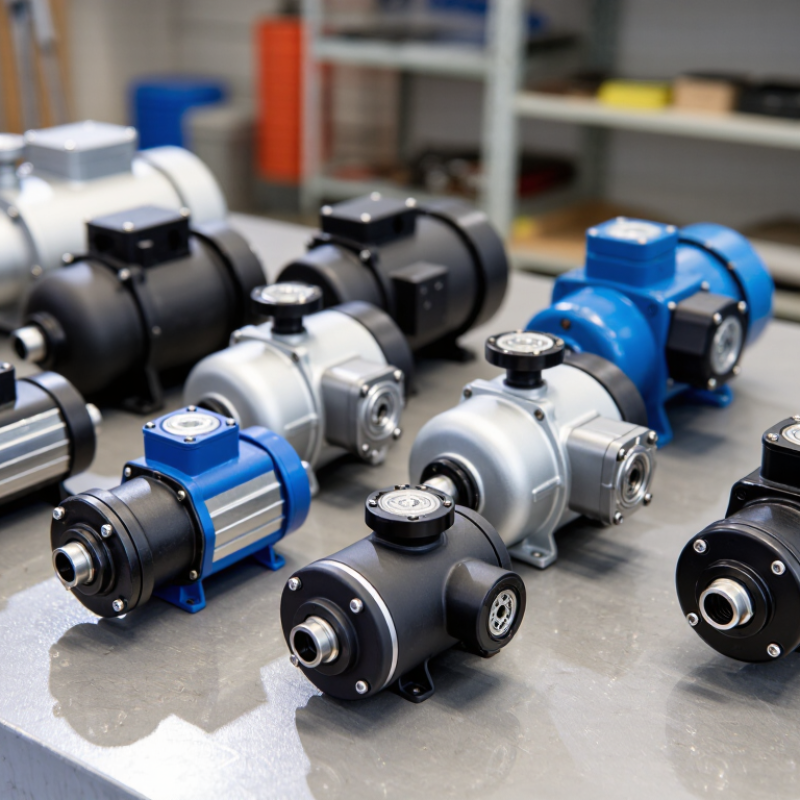
Oil-sealed vacuum pumps use different methods to move gas, so buyers should compare more than headline vacuum levels. Rotary-vane pumps use sliding vanes inside a rotating chamber. They are compact and often suit steady, clean service. Oil lubricates and seals the moving parts, but it can become contaminated by process vapors. That matters. Check oil condition, separator performance, and the recommended service interval before comparing operating costs.
Screw pumps use paired rotors to move gas along the chamber. Some designs inject oil for sealing and cooling; others are dry-running, so the specification needs careful reading. Oil-injected models may suit demanding duties, but their oil management adds maintenance. Liquid-ring pumps work differently: a rotating liquid forms the seal, commonly using water or another compatible fluid. They can handle wet gas well, though liquid use and achievable pressure depend on the installation. They are not typically oil-sealed pumps. Not always. A tidy comparison table can hide these distinctions. Match the pump to gas composition, vapor load, duty cycle, and available maintenance skills, then confirm performance with application-specific data.
For global buyers, speed, ultimate pressure, and motor power reveal different parts of an oil vacuum pump’s performance. The figures below are representative comparison points, not certified specifications for particular models. Check whether pressure ratings refer to total pressure or partial pressure.
A 5 m³/h pump may reach 0.5 mbar at 0.18 kW. A 10 m³/h unit: 0.2 mbar, 0.25 kW. A 20 m³/h unit: 0.1 mbar, 0.55 kW. A 40 m³/h unit: 0.05 mbar, 1.1 kW. A 65 m³/h unit: 0.05 mbar, 1.5 kW. A 100 m³/h unit: 0.03 mbar, 2.2 kW. A 160 m³/h unit: 0.03 mbar, 3.0 kW. A 250 m³/h unit: 0.02 mbar, 5.5 kW. A 500 m³/h unit: 0.01 mbar, 11 kW. A 1,000 m³/h unit: 0.01 mbar, 18.5 kW.
Higher speed does not guarantee faster evacuation in every installation. Pipe diameter, leaks, oil condition, and vapor load all affect real performance. A small workshop pump can suit a short line, while a long, narrow intake may reduce its effective speed. Check motor supply, noise, service intervals, and oil-mist control before comparing prices. One detail is easy to miss: quoted ultimate pressure may require clean oil and ideal test conditions. Real results can be less tidy.
Comparing the top ten oil vacuum pumps starts with comparable measurements, not catalog claims. ISO 21360-1:2020 provides a general framework for measuring and reporting vacuum-pump performance, including pumping speed and pressure. For global buyers, test conditions matter as much as the numbers. An impressive ultimate-pressure figure can hide weak performance at the working pressure. Small details matter.
Record inlet pressure, gas type, pump configuration, and operating conditions for each test. Use calibrated pressure gauges suited to the measurement range, and note their location. Keep the pump warm and stable before collecting readings; oil temperature can affect results. Measure pumping speed across the pressure range relevant to your process, rather than relying on one point. For ultimate pressure, document the test setup and stabilization time. A reading without these details is hard to compare. Even careful tests can differ when fittings, conductance, or gauge placement change, so treat small differences cautiously.
Tips: Ask suppliers for test conditions and raw measurement data. Check whether accessories or gas-ballast settings were used. If a result looks unusually strong, repeat the test; one clean reading is not always convincing.
A vacuum target is only useful when its units and measurement point are clear. One millibar equals 100 pascals, so 1 mbar is a pressure reading, not a pump-capacity rating. Capacity is usually expressed as gas volume moved per unit of time. These numbers matter. A pump with a low stated ultimate pressure may still take too long to reach the required pressure in a large chamber.
Start with the working pressure your process needs, then check the pump’s performance curve at that pressure. Consider chamber volume, expected cycle time, piping restrictions, and leaks. A narrow hose can slow evacuation, even when the pump’s nominal capacity looks generous. Real systems are imperfect. Small leaks and moisture released from chamber surfaces can raise pressure or extend pump-down time.
Ask whether the quoted pressure is an ultimate value measured under controlled conditions or a practical operating target. Check how the pump handles your process gas and whether oil carryover could affect sensitive equipment. A suitable oil-sealed pump should meet the target with useful capacity margin, without being oversized for every operating condition. Verify the manufacturer’s test conditions, and plan regular oil checks. I would still confirm performance in the actual setup; catalog figures cannot capture every installation detail.
Top 10 Oil Vacuum Pumps for Global Buyers?
Check Global Electrical Safety Against IEC 60204-1:2016
An oil vacuum pump may look self-contained, but its motor, controls, and wiring form part of the machine’s electrical equipment. IEC 60204-1:2016 covers machinery electrical systems from the supply connection point. It applies to systems up to 1,000 V AC or 1,500 V DC, at frequencies up to 200 Hz (IEC, 2016). Ask suppliers to state the pump’s rated supply conditions clearly. A voltage on a sales sheet is not enough.
During inspection, check protective-bonding continuity from the incoming earth terminal to the frame, motor housing, and cabinet door. Confirm that isolation, overcurrent protection, cable sizing, and wiring diagrams match the delivered configuration. Emergency-stop behavior should follow the machine’s risk assessment and documented design. A clean cabinet photo cannot prove a sound earth path. Paper checks can miss a loose terminal.
The ILO’s 2023 global estimates, based on 2019 data, recorded 2.93 million work-related deaths and 395 million non-fatal work injuries. These figures cover all work hazards, not vacuum pumps alone (ILO, 2023). They underline the value of test records and site checks. A checklist helps. It is not proof. Supply changes, long cable runs, or a missing earth link can alter the installation. Have qualified personnel verify the assembled system against the standard and applicable local requirements.
Comparison of common oil-based vacuum-pump configurations. This is a practical selection guide, not a ranked product list. Performance figures are indicative ranges; confirm the exact operating curve, materials, voltage, and duty rating with the supplier.
| No. | Pump type or configuration | Indicative ultimate pressure | Typical pumping-speed range | Common applications | IEC 60204-1:2016 buyer checks |
|---|---|---|---|---|---|
| 1 | Single-stage oil-sealed rotary-vane pump | Approximately 0.5–2 mbar (50–200 Pa) | Approximately 2–300 m³/h | Rough vacuum, vacuum packaging, and general industrial evacuation. | Check supply voltage and frequency, protective earthing, motor overload protection, isolating means, and accessible electrical documentation. |
| 2 | Two-stage oil-sealed rotary-vane pump | Approximately 0.001–0.01 mbar (0.1–1 Pa), depending on design and gas load | Approximately 2–300 m³/h | Laboratory systems, analytical instruments, and processes needing lower pressure than a typical single-stage pump. | Verify the electrical ratings for the specified operating conditions; check protective bonding, overcurrent protection, and safe isolation for maintenance. |
| 3 | Oil-sealed rotary-piston pump | Typically around 0.01–0.1 mbar (1–10 Pa), model dependent | Approximately 30–1,000 m³/h | Industrial rough-vacuum service, including large vessels and processes with sustained gas throughput. | Review motor starting current, short-circuit and overload protection, earthing arrangements, and any required interface with the machine control system. |
| 4 | Oil-sealed rotary-screw vacuum pump | Commonly in the rough-vacuum range; exact limit depends on design | Approximately 100–2,000 m³/h | Central vacuum systems and continuous industrial processes requiring substantial throughput. | Check the control-panel supply and protective devices, emergency-stop integration where required by the machine risk assessment, and documented restart behavior after power loss. |
| 5 | Oil-sealed liquid-ring pump | Often approximately 30–100 mbar absolute, depending on liquid temperature and configuration | Approximately 10–10,000 m³/h | Wet, humid, or vapor-rich service where a liquid-ring design is suitable; operating liquid and process compatibility must be assessed. | Check electrical protection for the motor and any auxiliary equipment, protective bonding, enclosure suitability for the installation environment, and safe isolation of connected equipment. |
| 6 | Oil-sealed rotary-vane pump with Roots booster | Can reach roughly 0.01–1 mbar as a system; depends on backing pump and process load | Combined systems commonly cover approximately 100–10,000 m³/h | Faster pump-down of larger chambers and processes with higher gas loads; the Roots stage normally requires a backing pump. | Assess the complete machine assembly, including separate motor circuits, coordinated protective devices, interlocks, control wiring, and prevention of unsafe automatic restart. |
| 7 | Oil-sealed rotary pump with inlet filter or mist separator | Typically similar to the underlying rotary-pump design; accessories can affect conductance | Approximately 2–1,000 m³/h, according to the base pump | Applications where particulate protection or reduced oil-mist discharge is needed; filter and separator maintenance is important. | Confirm the electrical configuration of accessories and check that maintenance access, isolation points, and protective measures are covered in the machine documentation. |
| 8 | Oil-sealed chemical-duty rotary-vane pump | Typically within the rough-to-medium vacuum range; depends on gas, seals, and oil | Approximately 2–300 m³/h | Compatible chemical or laboratory processes; confirm resistance to process vapors and use suitable oil, seals, and gas-ballast arrangements. | Check the intended electrical installation conditions and enclosure protection; assess hazards from process substances separately from electrical conformity. |
| 9 | Oil-sealed pump with gas ballast | Ultimate pressure is generally higher with gas ballast open than with it closed | Approximately 2–1,000 m³/h, depending on pump design | Processes containing condensable vapor, where gas ballast can help reduce condensation in the pump oil. | Verify control or actuator wiring if gas-ballast operation is automated; document protective bonding, circuit protection, and safe servicing procedures. |
| 10 | Oil diffusion pump with a backing pump | High-vacuum systems can reach approximately 10⁻⁶–10⁻⁸ mbar under suitable conditions | Approximately 50–50,000 L/s for the diffusion stage; system speed depends on inlet conductance and backing | High-vacuum coating, research, and vacuum-processing systems; requires a suitable backing pump and thermal management. | Review electrical protection and isolation for heater, backing pump, cooling, and controls; check interlocks and over-temperature protection as part of the equipment risk assessment. |
IEC 60204-1:2016 addresses electrical equipment of machinery; it is not, by itself, a pump performance standard or a blanket certification claim. For a global purchase, confirm the applicable edition and local regulations, machine boundaries, supply-system compatibility, protective bonding and earthing, overcurrent protection, isolation, control-circuit design, documentation, and any required emergency-stop measures with the manufacturer and qualified electrical professionals.