- Eng
- Deu
- Fra

Top 10 Commercial Trash Cans for Global Buyers?
Choosing the right Commercial Trash Cans is a practical decision, not a simple purchasing exercise. Global buyers must consider capacity, material, mobility, hygiene, fire safety, and local waste-sorting practices. A stainless steel can may suit a hotel lobby, while a heavy-duty polyethylene unit may perform better near a busy loading area. Details matter.
Dr. William Rathje, founder of the Garbage Project, famously observed, “A modern landfill is a monument to the failure of recycling.” His warning remains relevant. A well-designed trash can can guide better disposal, but it cannot repair a poor waste system. That uncomfortable fact deserves attention.
This guide examines ten Commercial Trash Cans for international buyers, comparing their construction, usability, maintenance needs, and long-term value. It considers narrow corridors, outdoor exposure, strong odors, wet waste, and constant foot traffic. Some models look impressive but become difficult to clean. Others seem plain, yet survive years of daily use.
Performance comes first.
Buyers should also question vague product claims. “Commercial grade” can mean very different things across suppliers and regions. Check gauge thickness, liner compatibility, lid operation, wheel quality, and replacement-part availability. Confirm dimensions before ordering; a few centimeters can create expensive installation problems.
There is no universal winner. A restaurant, airport, office tower, and school need different solutions. This comparison aims to make those differences visible, while acknowledging one limitation: product performance can change with climate, cleaning routines, and user behavior. The best choice is rarely the largest or cheapest model. It is the one that fits the site, supports safer habits, and remains dependable after the showroom shine disappears.
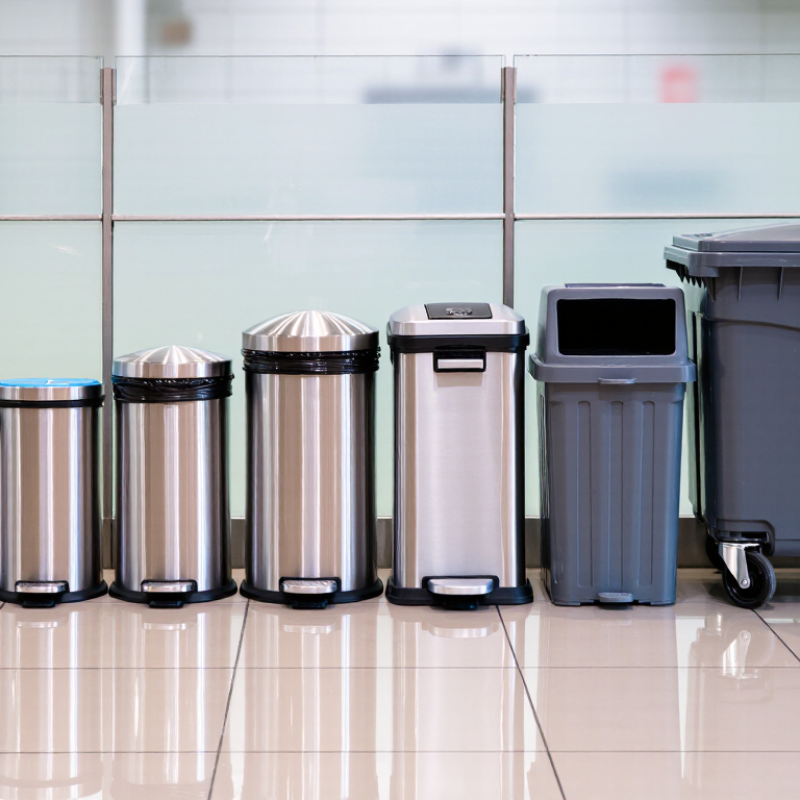
What Defines a Commercial Trash Can for Business Use?
A commercial trash can is built for repeated business use, not occasional household disposal. It should withstand constant opening, moving, cleaning, and contact with heavy waste. In busy offices, restaurants, schools, and public facilities, weak hinges or thin walls become maintenance problems quickly. It must endure.
Capacity should match the waste produced during a normal operating day. A small office may need a compact container, while a food-service area often requires larger volume and secure odor control. Durable plastic, coated steel, or stainless steel can support different environments. The best material depends on moisture, impact risk, cleaning routines, and budget. Placement matters. A stable base reduces tipping near entrances, corridors, and service counters. Foot pedals, swing lids, or touch-free sensors can improve hygiene, but each mechanism needs regular inspection. A complicated lid may fail sooner when staff lack time for careful maintenance.
Reliable commercial design also considers liner changes, drainage, sharp edges, and access for users with different mobility needs. Smooth interior surfaces make cleaning easier and reduce residue buildup. Flame-resistant construction may be appropriate in selected settings, but buyers should verify tested performance rather than trust vague claims. I have seen businesses choose oversized units that block walkways. That decision looked efficient, but it created daily inconvenience. No specification is perfect. Buyers should compare real waste patterns, cleaning labor, local facility requirements, and replacement costs before selecting from the top commercial trash cans available.
| Rank | Commercial Trash Can Type | Typical Capacity | Typical Dimensions | Common Materials | Best Business Applications | Key Commercial Features | Primary Selection Consideration |
|---|---|---|---|---|---|---|---|
| 1 | Large Wheeled Bin | 240–1,100 L | Approximately 580–1,370 mm high; 580–1,370 mm wide depending on capacity | High-density polyethylene body; steel or polymer axle; rubber or polymer wheels | Warehouses, factories, shopping centers, campuses, and outdoor service areas | Two or four wheels, hinged lid, easy maneuverability, compatibility with mechanical lifting systems | Collection access, loading weight, wheel durability, and available storage space |
| 2 | Slim Indoor Waste Bin | 30–90 L | Approximately 300–420 mm wide, 300–500 mm deep, and 600–900 mm high | Powder-coated steel, stainless steel, or flame-retardant plastic | Offices, hotels, reception areas, classrooms, and corridors | Small footprint, removable liner, quiet lid options, and easy placement against walls | Available floor space, appearance, cleaning frequency, and liner compatibility |
| 3 | Indoor Recycling Station | 60–240 L total capacity | Approximately 700–1,200 mm wide, 300–600 mm deep, and 800–1,100 mm high | Powder-coated steel, aluminum, recycled plastic, or laminate panels | Corporate offices, airports, universities, retail sites, and public buildings | Multiple labeled compartments, color-coded openings, removable containers, and modular layouts | Waste-stream clarity, accessibility, cleaning access, and local recycling requirements |
| 4 | Stainless Steel Pedal Bin | 20–90 L | Approximately 300–450 mm wide, 300–500 mm deep, and 450–850 mm high | Stainless steel exterior; galvanized or coated steel mechanism; plastic inner bucket | Commercial kitchens, clinics, laboratories, hotels, and washrooms | Hands-free foot pedal, tight-closing lid, removable inner bucket, and corrosion resistance | Hygiene requirements, pedal-cycle durability, cleaning chemicals, and ventilation needs |
| 5 | Outdoor Litter Bin | 50–240 L | Approximately 450–750 mm wide, 400–650 mm deep, and 800–1,200 mm high | Galvanized or powder-coated steel, stainless steel, aluminum, or UV-stabilized plastic | Parks, sidewalks, transport hubs, outdoor dining areas, and municipal facilities | Weather resistance, anti-fly lid, cigarette-disposal option, ground anchoring, and vandal-resistant construction | Rain protection, security, wind exposure, maintenance access, and public-use durability |
| 6 | Front-of-House Push-Door Bin | 60–180 L | Approximately 450–700 mm wide, 400–650 mm deep, and 850–1,200 mm high | Powder-coated steel, stainless steel, aluminum, or fire-retardant composite panels | Restaurants, food courts, hotels, hospitals, and high-traffic public venues | Self-closing push door, concealed liner, odor reduction, enclosed waste opening, and polished appearance | Fire-safety requirements, odor control, cleaning workload, and user throughput |
| 7 | Slim Pull-Out Cabinet Bin | 40–120 L | Approximately 250–500 mm wide, 450–650 mm deep, and 700–1,000 mm high | Stainless steel, powder-coated steel, or moisture-resistant plastic | Commercial kitchens, service counters, offices, and compact hospitality areas | Pull-out container, concealed bag storage, narrow profile, and integration with cabinetry | Cabinet dimensions, access clearance, moisture exposure, and serviceability |
| 8 | Heavy-Duty Open-Top Bin | 60–240 L | Approximately 400–700 mm wide, 400–700 mm deep, and 700–1,200 mm high | Rotomolded polyethylene, galvanized steel, or powder-coated steel | Warehouses, workshops, loading bays, event venues, and back-of-house operations | Wide opening, high impact resistance, reinforced rim, easy liner removal, and fast disposal | Waste size, odor exposure, weather conditions, and risk of overfilling |
| 9 | Medical and Hygienic Waste Bin | 20–90 L | Approximately 300–500 mm wide, 300–500 mm deep, and 500–900 mm high | Stainless steel, coated steel, or cleanable medical-grade plastic | Healthcare facilities, laboratories, care homes, pharmacies, and treatment rooms | Hands-free operation, smooth cleanable surfaces, secure lid, removable container, and leak-resistant design | Applicable healthcare-waste rules, decontamination method, access control, and liner type |
| 10 | Mobile Waste Collection Cart | 120–660 L | Approximately 600–1,200 mm wide, 700–1,300 mm deep, and 900–1,200 mm high | High-density polyethylene, steel frame, aluminum components, and industrial casters | Hotels, hospitals, airports, campuses, cleaning contractors, and facility-management operations | Lockable lid, swivel casters, push handles, washable body, and separate waste-stream options | Turning radius, floor protection, maximum load, cleaning procedure, and route distance |
Note: Dimensions and capacities are typical commercial ranges rather than specifications for a particular brand or model. Actual measurements vary by configuration, regional waste-collection standards, lid design, and manufacturer.