
231-941-0215 sale@namkeenmachine.com 2707 Aero Park Drive Traverse City, MI
Eng
  • Eng
  • Deu
  • Fra

China Top Commercial Display Cooler Manufacturers

Choosing a Commercial Display Cooler is not just a matter of comparing prices or browsing polished product photos. The right unit should keep products visible, hold a stable temperature, and fit the store’s daily routine. A bakery may need bright, even lighting for pastries, while a convenience store may value fast restocking and dependable door seals. Small details matter.

China’s commercial refrigeration industry includes manufacturers with different strengths, production capacities, and levels of export experience. This guide explores how to assess leading suppliers by reviewing practical factors such as cooling performance, cabinet materials, energy use, customization options, quality-control processes, and after-sales support. Specifications can help, but they do not tell the whole story. Ask how temperature is tested, what warranty support covers, and whether replacement parts are readily available.

A supplier that suits a large supermarket may not be the best fit for a neighborhood café. Nor does a low quotation automatically mean lower long-term cost. Buyers should compare comparable models and request clear documentation before making a decision. Factory visits, sample evaluations, or independent inspections may offer useful evidence when available. Even then, no checklist removes every uncertainty. Product claims deserve careful questions, and service quality can vary between projects. The sections ahead provide a grounded starting point for comparing China’s top commercial display cooler manufacturers and selecting a partner whose equipment matches real operating needs.
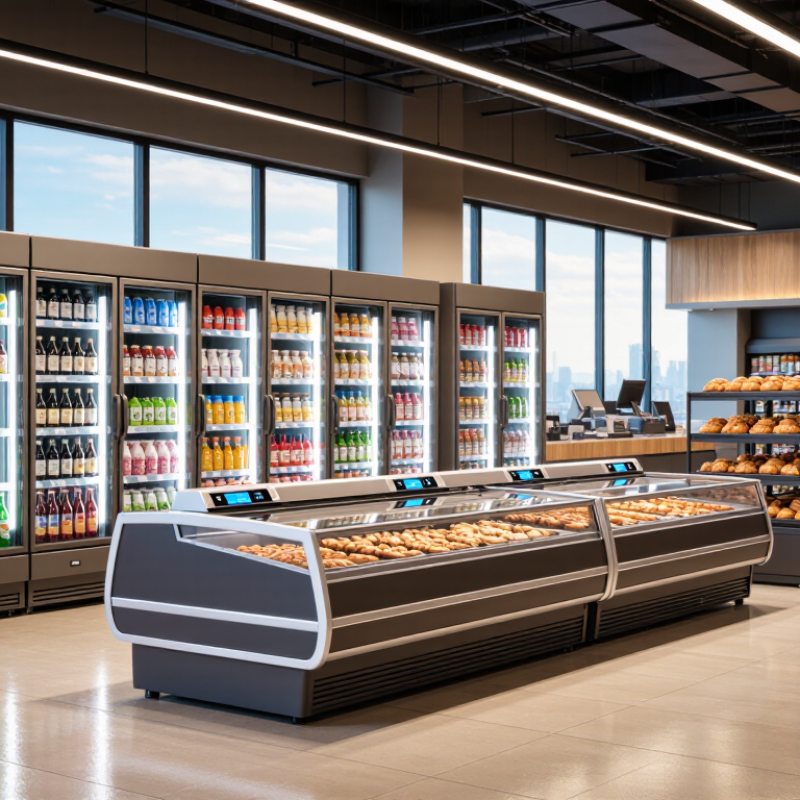
China Top Commercial Display Cooler Manufacturers

What Defines a Commercial Display Cooler and Its Main Product Types?

A commercial display cooler is a refrigerated cabinet designed to keep products chilled while making them easy to see and select. Unlike a storage refrigerator, it balances temperature control with visibility, lighting, and customer access. Look for even airflow across shelves, clear temperature displays, and doors or open fronts suited to the shop layout. Small details matter. A blocked vent can leave one shelf warmer than another.

Main types include glass-door merchandisers for bottled drinks and packaged foods, and open multideck cases for busy grocery aisles. Countertop coolers suit compact spaces and grab-and-go items. Serve-over deli cases place chilled foods behind glass, where staff can assist customers. Some cabinets are built for specific products, such as cakes or fresh produce, so humidity and shelf design may differ.

Choosing a type depends on what will be displayed, how often shoppers reach inside, and how much floor space is available. A glass door can reduce exposure to warm room air, but frequent opening still affects performance. Open cases offer quick access, though their placement near entrances may make cooling less consistent. Specifications help, but they do not tell the whole story; real store traffic can expose weaknesses that a showroom test misses.

How Do China’s Manufacturers Serve Retail and Foodservice Markets?

China’s commercial display cooler manufacturers serve retail and foodservice buyers with different layouts and operating needs. Retail stores often need upright glass-door cabinets or open multideck cases that keep products visible under bright lighting. Cafés and restaurant kitchens may prefer compact counters, ingredient wells, and undercounter units that fit tight workspaces. Manufacturers commonly adjust cabinet dimensions, shelving, lighting, and temperature ranges for project specifications. A cooler that looks right in a catalog can still disappoint if its doors swing into an aisle.

Energy and reliability matter across both markets. The UNEP and FAO report Sustainable Food Cold Chains (2022) estimates that food cold chains account for about 4% of global greenhouse gas emissions. Buyers should therefore compare measured energy use, insulation, door seals, and service access—not just purchase price. Ask for test conditions behind performance figures; ambient heat, frequent door openings, and poor loading can change real-world results. One limitation: custom designs may complicate replacement parts if specifications are too unusual.

Tips

Request temperature and energy test data for the intended climate and duty cycle. Check sample units during peak hours, when doors open repeatedly and staff move quickly. Small details matter. Keep service access clear.

What Does ENERGY STAR’s 20% Energy-Saving Benchmark Mean for Buyers?

For buyers comparing commercial display coolers, a 20% energy-saving benchmark is a useful starting point. It generally describes lower energy use against a defined comparison model, not a guaranteed reduction in every shop. Ask what baseline, test method, and product category support the figure. ENERGY STAR qualification criteria are product-specific and may change. Check the current specification and the cooler’s documented annual energy use.

The difference becomes clearer on an electricity bill. If a comparable unit uses 5,000 kWh annually, a genuine 20% reduction would mean about 1,000 kWh saved each year. Your actual result can shift with room temperature, door openings, stocking patterns, and cleaning. A cooler beside a sunny window may use more power than its test conditions suggest. Small details matter. Compare annual kWh, usable shelf space, and purchase price, then estimate savings using your local electricity rate. I would be cautious about choosing from a percentage alone; even a reliable figure can feel less impressive when the real operating conditions are different. Ask for the test documentation, and check whether the listed consumption reflects the configuration you plan to buy.

China Top Commercial Display Cooler Manufacturers - What Does ENERGY STAR’s 20% Energy-Saving Benchmark Mean for Buyers?

Buyer Evaluation Dimension What to Check How to Interpret It Buyer Action
Meaning of a 20% energy-saving benchmark Compare the cooler’s annual energy use with that of a genuinely comparable baseline unit. A 20% reduction means the candidate uses 80% of the baseline’s energy. It is a comparison benchmark, not a universal ENERGY STAR requirement for every commercial cooler. Ask for the baseline, comparison method, equipment configuration, and energy-use figures in writing.
ENERGY STAR certification Check the exact model number and equipment category in the official ENERGY STAR product listing. Eligibility and performance criteria depend on the applicable product category and specification. A general claim about a product range does not confirm that a particular model is certified. Match the listing to the model number, configuration, and documentation offered for sale.
Annual energy-use comparison Compare energy consumption in kWh per year under like-for-like conditions. Example calculation: if a comparable baseline uses 3,650 kWh/year, a 20% reduction equals 730 kWh/year saved; the candidate would use 2,920 kWh/year. Use comparable test data rather than comparing figures measured under different methods or conditions.
Estimated electricity-cost savings Apply the buyer’s actual electricity tariff to the estimated annual kWh savings. Illustration only: 730 kWh/year saved at $0.15 per kWh equals $109.50 per year. Actual savings vary with local rates and operation. Calculate costs using the site’s tariff, including any relevant time-of-use rates or demand charges.
Product configuration Compare cooler type, capacity, door count, glazing, lighting, and other included features. Differences in configuration can affect energy use, so figures for dissimilar models may not provide a fair comparison. Request energy data for the exact configuration being quoted.
Operating conditions Review the stated test conditions and the intended installation environment. Ambient temperature, ventilation, loading, door openings, and maintenance can affect real-world electricity use. Confirm installation clearances and operating limits, and plan routine cleaning and maintenance.
Total cost of ownership Consider purchase price alongside expected electricity use and service requirements. Energy savings alone do not establish the lowest lifetime cost; the result depends on usage, energy prices, equipment life, and maintenance. Compare lifecycle assumptions consistently and ask suppliers to state the assumptions behind any savings estimate.
Documentation and verification Request the model datasheet, energy-use evidence, certification details where applicable, and warranty terms. Clear, model-specific documentation helps buyers verify performance claims and compare quotations on the same basis. Keep the documents with the quotation and verify the delivered model against the approved specification.
Note: The 20% example is an arithmetic comparison, not a claim about a particular manufacturer or product. ENERGY STAR requirements vary by equipment category and applicable specification; verify current certification and model details through official ENERGY STAR resources.

How Can Buyers Compare Manufacturers by Capacity, Refrigerant, and Certification?

A commercial cooler’s stated capacity can be misleading if buyers compare gross volume alone. Check usable shelf space, tray dimensions, and loading layout against the products you actually store. A unit holding boxed drinks may not suit tall bottles or prepared-food pans. Measure the doorway first. Also compare temperature recovery after frequent door openings, not just the advertised set point. Ask for test conditions and confirm they resemble your store’s ambient temperature and daily loading pattern.

Refrigerant choice affects energy use, maintenance, and long-term serviceability. Request the refrigerant type, charge amount, and performance data for the exact model. Then check whether qualified technicians and replacement parts are readily available in your market. A lower-impact refrigerant may be attractive, but the cabinet must still match your cooling needs and operating conditions. This detail is easy to overlook.

Certifications should be verified by model number, not accepted from a general brochure. Ask for current certificates or test reports covering relevant electrical safety and energy performance requirements. Confirm the issuing body and product scope with the documentation provided. Compare warranty terms, spare-parts support, and factory testing records alongside the headline price. A neat certificate is not enough if it covers a different configuration. The paperwork can be imperfect; clarify gaps before placing an order.

Which Factory, Product-Testing, and After-Sales Checks Matter Most?

When comparing China’s commercial display cooler manufacturers, inspect the production line, not just the showroom. Check incoming steel, insulation foam density, door alignment, and refrigerant leak-test records. Ask to see batch-level quality logs. A clean factory tour is useful, but it cannot prove consistent output. Small details matter.

Product testing should cover temperature stability, energy use, door-opening recovery, and operation in the intended store environment. ISO 23953 provides test methods and requirements for refrigerated display cabinets; request reports showing the tested model and conditions. The International Institute of Refrigeration’s 2019 report estimates that refrigeration uses about 17% of global electricity. So, compare measured energy figures, not broad efficiency claims. Ask for test results from an independent laboratory where available. One limitation: a brief factory demonstration may not reflect months of daily use.

After-sales checks deserve equal attention. Confirm spare-parts availability, response times, warranty exclusions, and who pays for on-site service. Ask for a sample service record and the expected replacement time for common parts, such as fans or controllers. Get commitments in writing. A polished brochure cannot repair a cooler during a summer rush. I would also ask how the supplier handles repeat faults; this answer is often less tidy than the sales presentation.