What is a Granulating Mixer and How Does It Work?
In the world of pharmaceuticals and food production, the Granulating Mixer plays a crucial role. John Smith, an industry expert with over 15 years of experience, states, “A proper granulating mixer can significantly enhance product consistency.” This reflects the importance of understanding how a granulating mixer operates and its impact on production quality.
Granulating mixers combine various raw materials into uniform granules, enhancing flow and processing. Commonly used in manufacturing, these machines ensure that ingredients are mixed thoroughly. Despite their complexity, many users remain unaware of operational nuances. It is essential to investigate how these mixers function to truly appreciate their efficiency.
Industries often overlook the significance of selecting the right granulating mixer. A poor choice can lead to inconsistent product quality. Buyers should consider a mixer's design, capacity, and application. A thoughtful approach can mitigate risks and improve outcomes in production processes, making the granulating mixer a vital element in many sectors.
What is a Granulating Mixer?
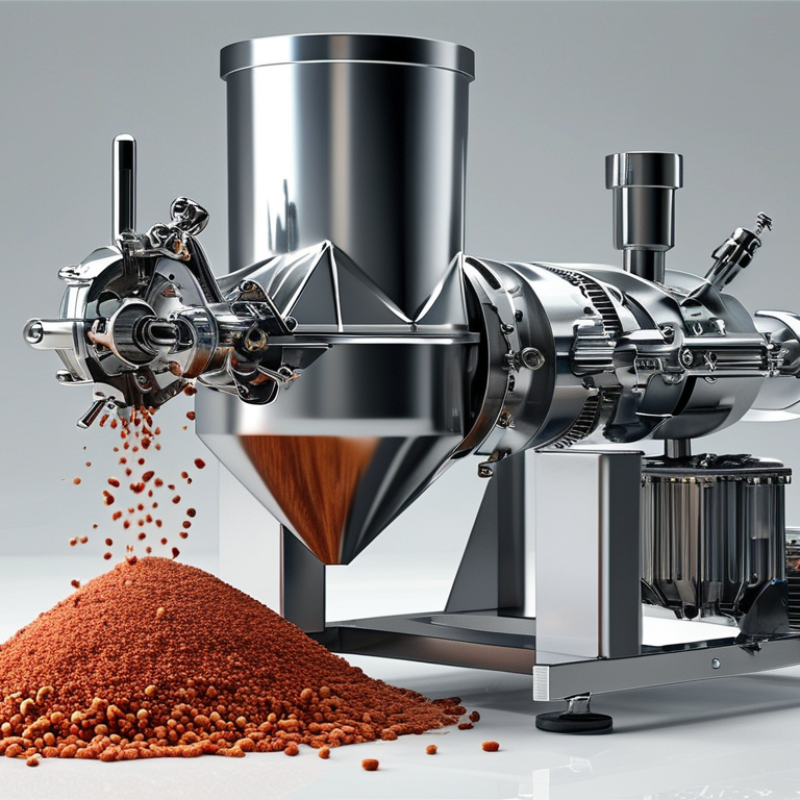
A granulating mixer is an essential piece of equipment in various industries, particularly in pharmaceuticals and food production. It combines powders and liquids to form granules, which improves flow properties. This equipment operates through a series of mechanical and fluid dynamics processes. The mixing blades rotate, creating shear forces that promote uniformity. Liquid binders are then introduced, allowing the powders to stick together.
These mixers come in various sizes and configurations. They can handle both small and large batches. The operator must monitor the blend to ensure the particle size is appropriate. This requires experience and a keen eye. Adjusting parameters during operation can lead to different outcomes, sometimes with unexpected results.
Understanding the intricacies of a granulating mixer is crucial for optimal performance. The process may not always yield predictable results. Variations in material properties can influence the final granule quality. Operators must be prepared to tweak the process and conduct tests. It's not uncommon to face challenges, such as uneven granulation or clumping. Continuous learning and adaptation are key in mastering the art of granulation.
Key Components of a Granulating Mixer
A granulating mixer is an essential piece of equipment in various industries, particularly in pharmaceuticals and food production. It combines powders and liquids to form granules, improving product consistency and quality. Understanding its key components can help users appreciate its versatility.
The main components include the mixer bowl, mixing blades, and granulation nozzle. The mixer bowl holds the ingredients, while the mixing blades ensure even distribution. These blades can vary in shape and size to suit specific material requirements. The granulation nozzle introduces liquid to the powder, facilitating the granulation process. It's important to adjust the nozzle settings to avoid excess moisture, which could lead to undesirable clumping.
Tips: Regular maintenance of these components is crucial. Any wear or damage can affect performance. Additionally, testing small batches can help determine the ideal mixing time and settings. Keep in mind, different materials might require adjustments to typical protocols. Experimentation leads to the best outcomes in the long run.
The Granulation Process Explained
Granulation is an essential process in many industries, particularly in pharmaceuticals and food production. It involves transforming fine powders into granules. This transformation improves the flow properties of powders and enhances the quality of the final product. The granulation process usually involves combining solids with a liquid binder. This mixture creates clusters or granules while minimizing dust and handling issues.
In a granulating mixer, the particles undergo continuous agitation. The mixer combines ingredients uniformly while adding moisture. The process requires careful control of speed and time. If the parameters are not managed well, inconsistencies can occur. For instance, too much moisture can lead to clumpy mixtures, while too little can result in dry, unbonded powders.
Temperature is another critical factor in granulation. If the temperature is high, it may affect the quality of sensitive materials. Overheating can cause degradation. It’s vital to monitor these aspects closely, as even small deviations can lead to significant product variation. Ultimately, understanding the granulation process and its nuances is key to achieving the desired product quality. Each operator must continually assess their techniques for optimization.
Different Types of Granulating Mixers
Granulating mixers are essential in various industries. These machines transform powders into granules. Understanding the types of granulating mixers is crucial for selecting the right equipment for specific needs.
The first type is the high-shear mixer. This equipment uses high-speed blades to agitate materials. It creates granules quickly, but care is needed to prevent overheating. Next, the low-shear mixer offers gentler processing. It is suitable for fragile products. The blending is uniform, minimizing degradation. However, the granule size can be inconsistent.
Another option is the fluidized bed granulator. This mixer uses airflow to suspend and coat particles. It ensures even granulation but may require more space. Finding the right balance is vital. Different processes require tailored solutions. Consider your material's properties and desired output. Potential challenges must be addressed for optimal results.
Granulating Mixer Types and Specifications
| Type | Operation Principle | Applications | Capacity (kg/h) |
| High Shear Mixer | Utilizes high-speed blades to create a strong shear force for mixing and granulating. | Pharmaceuticals, Food Industry, Chemicals | 100 - 2000 |
| Fluid Bed Granulator | Uses air to fluidize the powder bed, allowing for even coating and granulation. | Granules for tablets, Coatings, Agrochemicals | 50 - 1500 |
| Paddle Mixer | Employs rotating paddles to mix and granulate materials uniformly. | Food Industry, Fertilizers, Plastics | 200 - 3000 |
| Double Cone Mixer | Features a double cone shape to enhance mixing and granulating efficiency. | Fine Chemicals, Powdered Food, Pharmaceuticals | 100 - 2000 |
Applications of Granulating Mixers in Various Industries
Granulating mixers are essential tools used in various industries, such as pharmaceuticals, food production, and chemical manufacturing. These mixers efficiently combine powders and liquids, resulting in uniform granules. This process enhances flow properties and improves the availability of active ingredients in tablets and other products. According to a report by Research and Markets, the global granulating mixer market is projected to grow significantly, reaching USD 2.1 billion by 2025.
In the pharmaceutical industry, granulating mixers are crucial for blending active pharmaceutical ingredients (APIs) with excipients. This ensures consistent dosages in tablets. In the food sector, they help create uniform powder blends, which is vital for producing high-quality products. The ability to control particle size can significantly influence the final product’s texture and taste, highlighting the importance of these mixers.
Tips: Regular maintenance of granulating mixers can prevent downtime. Operators should often check for wear and tear to ensure optimal performance. Proper training on operating these machines boosts efficiency. Understanding the intricacies of each application can lead to better product consistency. Balancing the need for speed with quality control remains a challenge in many production settings.