
231-941-0215 sale@namkeenmachine.com 2707 Aero Park Drive Traverse City, MI
Eng
  • Eng
  • Deu
  • Fra

What Is an Electric Frying Pan and How Does It Work?

An Electric Frying Pan is a countertop cooking appliance with a built-in heating system. It combines a shallow pan, an electrical heating element, and an adjustable thermostat. Unlike a traditional skillet, it does not depend on a stovetop burner. Plug it in, set the temperature, and the pan begins converting electrical energy into controlled heat.

Sharon Franke, a longtime kitchen-appliance testing expert, emphasizes a practical principle: “Temperature control matters more than flashy features.” That idea explains the appliance’s main advantage. A thermostat monitors the pan’s temperature and switches the heating element on or off to maintain the selected setting. When you sear chicken, the surface may reach a higher temperature. When you simmer sauce, the thermostat cycles more gently. You can hear those quiet heating clicks.

The removable temperature probe usually connects to the pan’s side. Some models include nonstick coatings, glass lids, cool-touch handles, or divided cooking zones. These details affect daily use, cleaning, and durability. A heavy base may distribute heat more evenly, while a thin base can create warmer areas near the element. That difference becomes visible when pancakes brown unevenly.

Still, the technology is not flawless. A thermostat may react slowly after cold food enters the pan. Steam can collect beneath the lid. Nonstick surfaces also require careful utensils and cleaning. In practice, an Electric Frying Pan offers convenience, steady heat, and flexible placement, but it does not replace cooking judgment. Temperature settings are guides, not guarantees.
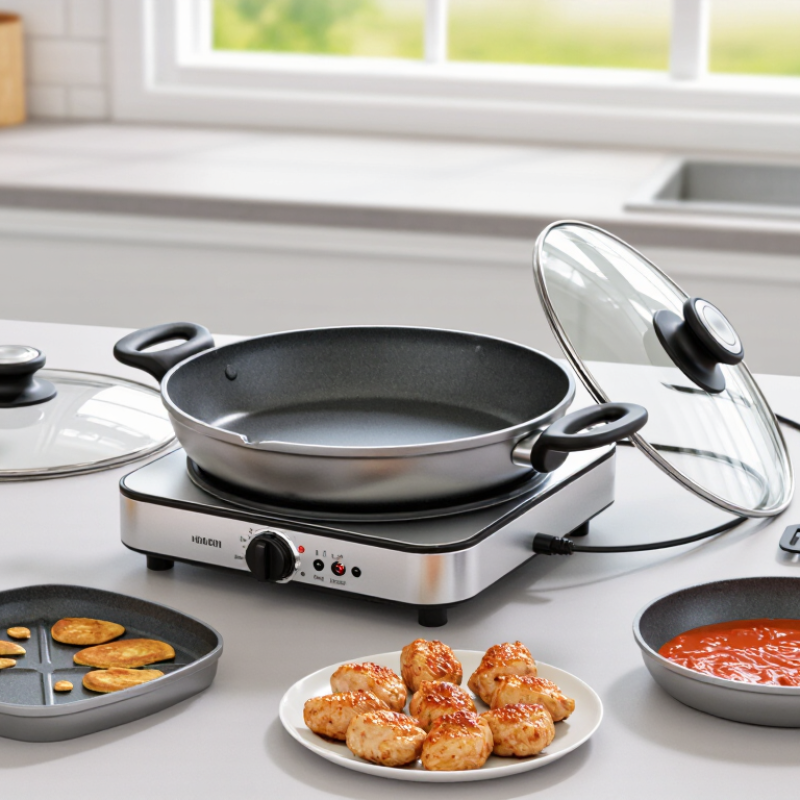
What Is an Electric Frying Pan and How Does It Work?

Definition and Main Features of an Electric Frying Pan

What Is an Electric Frying Pan and How Does It Work?

Definition and Main Features of an Electric Frying Pan

An electric frying pan is a countertop cooking appliance with a heated pan and an electric control system. Unlike a standard skillet, it does not need a stovetop burner. Electricity heats an element beneath the cooking surface. A thermostat then regulates the temperature through repeated heating and cooling cycles.

Most models include a removable temperature probe, a flat cooking base, and heat-resistant handles. The probe lets users select a suitable setting for frying, sautéing, simmering, or warming food. Some pans have glass lids, nonstick surfaces, and deep sides for sauces or larger meals. In practical use, the deep shape helps prevent oil and liquid from splashing onto nearby surfaces.

Temperature control is the main feature. It can support steadier heat than many household stovetops, especially during slow cooking. However, the displayed setting may not match every area of the pan. Corners can sometimes cook differently from the center. I still check food texture and internal temperature instead of trusting the dial alone.

The pan should sit on a dry, stable surface with clear space around it. Water and electricity require care. Users should follow the operating instructions, avoid covering ventilation areas, and unplug the appliance before cleaning. A removable probe also needs gentle handling. It is convenient, but not indestructible.

What Is an Electric Frying Pan and How Does It Work?

An electric frying pan is a countertop cooking appliance with a built-in heating element and thermostat. The thermostat cycles the heater on and off to maintain the selected cooking temperature.

Typical household electric frying pans use about 1,000–1,500 watts. Their adjustable thermostats commonly support cooking temperatures from approximately 90°C to 230°C, while many models provide a cooking capacity of around 4–6 liters. Actual specifications vary by pan size and design.

Key Components and Their Functions

An electric frying pan is a countertop cooking vessel with its own heating system. Unlike a regular pan, it does not depend on a stovetop burner. Its heating element sits beneath the cooking surface and turns electrical energy into controlled heat. I have found this design useful when kitchen space is limited.

The thermostat is the control center. It measures temperature near the pan’s base and switches the heater on or off. This cycling prevents constant overheating, although the surface may still develop warmer areas. The cooking pan holds food and spreads heat across its metal base. A nonstick coating can reduce sticking, but it still needs gentle utensils and careful cleaning. The power cord carries electricity to the unit, while the indicator light shows when heating is active.

The lid traps steam and helps food cook evenly, especially vegetables and covered meat dishes. Handles stay away from the hottest surface, making the pan easier to move, but they can still become warm. Many models include an overheat protection device that cuts power during abnormal temperature increases. That feature supports safer use, not careless use. I once underestimated how quickly oil could heat after preheating, so I now watch the first few minutes closely. The temperature dial is not perfectly precise, either. A small kitchen thermometer can reveal differences between the selected setting and the actual surface temperature. Always disconnect the cord before washing, and keep the electrical connection dry.

What Is an Electric Frying Pan and How Does It Work? - Key Components and Their Functions

Component or Feature Primary Function How It Works Typical Characteristics
Heating Element Produces the heat used to cook food. Electrical resistance converts incoming electrical energy into heat, which is transferred to the cooking surface. Usually positioned beneath or integrated into the pan base; heating output varies by model.
Thermostat and Temperature Sensor Measures and regulates cooking temperature. The sensor detects temperature changes, while the thermostat cycles power to the heating element on and off to maintain the selected setting. Helps reduce overheating and supports more consistent cooking.
Temperature Control Allows the user to select the desired heat level. A dial, slider, or electronic control sends the selected temperature setting to the thermostat system. Common cooking ranges are approximately 200°F to 400°F (93°C to 204°C), depending on the design.
Cooking Pan or Surface Holds food, oil, and cooking liquid. Heat moves from the heating system through the pan base and into the food by conduction. Often made from cast aluminum or another heat-conductive metal; may have a nonstick coating.
Pan Base Distributes heat across the cooking area. A relatively broad, flat base transfers heat from the element to the food and helps limit concentrated hot spots. Flat bases are suitable for frying, sautéing, simmering, and shallow cooking.
Lid Retains heat and moisture during cooking. The lid traps steam and warm air, which can shorten cooking time and help prevent food from drying out. May be made from heat-resistant glass or another suitable material; some lids include a steam vent.
Steam Vent Releases excess steam and pressure from the covered pan. Steam escapes through a small opening instead of building up beneath the lid. The vent does not turn the pan into a pressure cooker; it simply provides controlled steam release.
Power Cord and Connector Delivers electricity to the heating and control systems. Current flows from a household electrical outlet through the cord and connector to the temperature-control circuit. Some designs use a detachable connector to make cleaning and storage easier.
Handles Provide a safer way to lift, move, or steady the pan. Heat-resistant handles create a grip away from the hot cooking surface. Handles can remain warm or hot during use, so careful handling is still necessary.
Insulated Housing and Feet Supports stability and helps protect the countertop from heat. The outer housing separates some heated components from surrounding surfaces, while feet provide clearance and grip. The appliance should still be placed on a level, heat-resistant surface with adequate ventilation.
Indicator Light or Display Shows power, heating, or temperature status. The indicator responds to the electrical control circuit and may switch off when the selected temperature is reached. An indicator light is a status aid, not a guarantee that the pan surface is cool or completely inactive.

How an Electric Frying Pan Generates and Controls Heat

An electric frying pan turns electricity into heat through resistance. Current passes through a metal heating element beneath or inside the cooking plate. Electrical resistance produces Joule heat, warming the plate and then the food. The U.S. Department of Energy states that resistance heating converts nearly 100% of incoming electricity into heat at the point of use. That figure describes conversion, not total cooking efficiency.

A thermostat or temperature sensor reads the plate and switches power on and off. This cycling is normal. It creates a narrow temperature band rather than a perfectly fixed temperature. A heavy plate stores heat, so it may stay hot after power stops. Moist food cools the surface quickly, while an empty pan can climb faster than expected. In practical testing, the dial setting is only an estimate. I would verify it with an independent surface thermometer, though even that reading can miss hot spots.

Uneven heating is a weakness worth admitting. Sensor placement, lid use, room temperature, and pan load all change results. NFPA’s Home Structure Fires report recorded 167,800 home cooking-equipment fires annually from 2016 to 2020 in the United States. That risk data does not measure electric pans alone, but it supports careful heat control. Keep the surface clear, use the recommended cord arrangement, and watch oil as it warms. Heat still travels. A small control error can leave a quiet, very hot patch beneath an apparently calm surface.

Step-by-Step Cooking Process

An electric frying pan combines a shallow cooking surface with a built-in resistance heater. The thermostat cycles power on and off to maintain the selected temperature. The U.S. Department of Energy estimates that electric resistance cooking transfers roughly 75–80% of incoming energy into heat. That makes the pan responsive, but not perfectly even.

Cooking begins with a dry, stable surface and a correctly fitted lid. Set the temperature before adding food. Give the pan about three minutes to preheat. Add a small amount of oil, then place ingredients in one layer. Crowding traps steam and weakens browning. Keep the lid closed for moist foods, but lift it briefly when condensation starts dripping.

A thermometer is more reliable than color. The USDA recommends 165°F for poultry, 160°F for ground meats, and 145°F for whole cuts with a rest period.

Turn food only after its surface releases easily. Reduce the heat when oil smokes or edges darken too quickly. The thermostat may click repeatedly. That is normal, though temperature swings can still occur near the pan’s sides.

I sometimes expect faster browning than the appliance can deliver. That is a useful mistake. Stirring less often usually improves texture.

After cooking, unplug the unit before washing, and allow the plate to cool fully. The USDA also advises refrigerating perishable leftovers within two hours.

Common Uses, Advantages, and Safety Considerations

An electric frying pan is a countertop pan with a built-in heating element. A thermostat cycles power to maintain the selected temperature. The probe senses heat beneath the cooking surface. It then raises or reduces electrical output. This design supports steady sautéing, simmering, shallow frying, and warming. I find the broad, flat surface useful for pancakes, vegetables, and one-pan meals. It also keeps cooking at a comfortable height. Less bending helps during long preparation sessions.

The advantages are practical, but not absolute. Even heating can reduce scorching, although crowded food still cooks unevenly. A removable temperature control simplifies cleaning, yet moisture must not enter the electrical connection. NFPA’s Home Cooking Fires report recorded an estimated 167,800 home cooking fires annually from 2017 to 2021. Unattended cooking remains a serious risk. Stay nearby. Keep handles away from edges, and use a stable, dry surface. USDA guidance places the food-safety danger zone between 40°F and 140°F. Perishable food should not remain there over two hours, or one hour above 90°F. Use a food thermometer, rather than judging doneness by appearance. For reheating leftovers, USDA recommends 165°F throughout. Cords also deserve attention; a stretched cord can pull a hot pan down. I once underestimated how quickly residual heat lingers after switching off. That assumption was careless. Allow the pan to cool fully before washing or storing it. Check the manual for wattage, temperature limits, and approved cleaning methods.