
231-941-0215 sale@namkeenmachine.com 2707 Aero Park Drive Traverse City, MI
Eng
  • Eng
  • Deu
  • Fra

How to Choose the Right Galvanized Steel Supplier

Choosing the right Galvanized Steel supplier is a technical purchasing decision, not merely a price comparison. Global steel demand remains substantial. The World Steel Association reported approximately 1.89 billion tonnes of crude steel production in 2023. That scale creates abundant supply, but it also creates uneven quality, documentation, and service standards.

Zinc availability also matters. The USGS Mineral Commodity Summaries 2024 reported global zinc mine production near 12 million metric tons in 2023. Zinc prices, energy costs, and regional capacity can influence coating consistency and delivery schedules. A dependable supplier should explain these market pressures clearly, rather than hide behind a low quotation.

Look for traceable mill certificates, clear coating-weight data, and compliance with standards such as ASTM A653 or ISO 1461, where applicable. Confirm the steel grade, base-metal thickness, zinc coating, surface finish, edge condition, and testing method. Small details matter. A sample coil may look bright and smooth, yet fail during forming if the coating is uneven or the substrate lacks the required strength.

Supplier evaluation should also include production audits, inspection records, packaging quality, and realistic lead times. Ask how the supplier handles nonconforming material. That answer can reveal more than a polished brochure. Industry reports provide useful benchmarks, but they cannot replace direct verification. No scorecard is perfect. Buyers should review performance over several orders, compare actual certificates with delivered coils, and document every variance. This disciplined approach reduces corrosion risk, production interruptions, and costly rework.
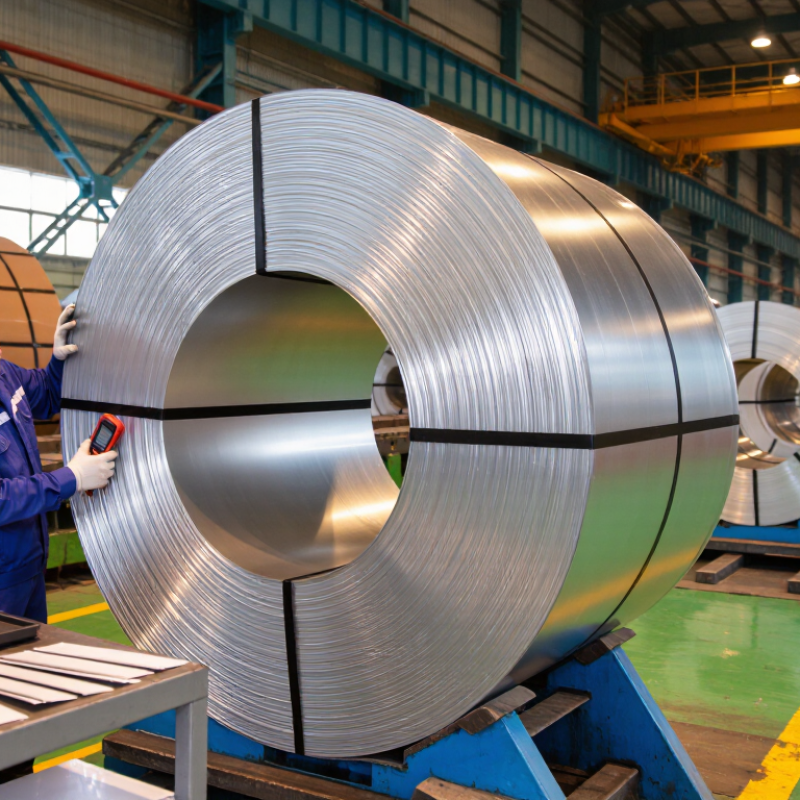
How to Choose the Right Galvanized Steel Supplier

Define Your Galvanized Steel Requirements and Project Specifications

Choosing the right galvanized steel supplier starts with a precise project definition. “Galvanized steel” is not a complete specification. Record the required steel grade, thickness, width, coil or sheet format, and expected quantity. Include the coating designation or minimum zinc coating mass. A bright surface alone does not prove adequate protection.

Describe the working environment in practical terms. Is the steel exposed to rain, road salt, indoor humidity, or abrasive handling? Note forming, welding, punching, and cutting requirements. Tight bends may need suitable material properties and controlled coating quality. State acceptable dimensional tolerances, edge condition, surface finish, and cut-length limits. These details help suppliers quote comparable materials instead of making assumptions.

Ask for inspection reports, coating measurements, mechanical test results, and traceable shipment records. Confirm which recognized standard supports the material and whether testing covers every production lot. Packaging also matters; poorly protected bundles can arrive with wet storage stains or damaged edges. I once focused too heavily on price and overlooked delivery tolerances. That created extra trimming work. A better specification includes the delivery schedule, unloading conditions, documentation, and a clear process for handling nonconforming material. Recheck the specification with the fabricator before requesting final quotations.

Evaluate Supplier Quality Standards, Certifications, and Production Capacity

Choosing a galvanized steel supplier requires more than comparing prices. Start by checking quality standards for the exact product and application. ASTM A123 covers fabricated steel, while ASTM A653 applies to galvanized sheet and strip. European projects may require EN 10346. Ask for batch-specific coating mass results, dimensional records, and salt-spray or adhesion test methods. Generic certificates are not enough.

Look for independently verified ISO 9001 quality systems, plus ISO 14001 and ISO 45001 where environmental and workplace controls matter. Verify certificate scope, issuing body, expiry date, and production site. A certificate alone can mislead. Request EN 10204 3.1 inspection documents, heat numbers, and traceability from coil to shipment. The World Steel Association reported approximately 1.89 billion tonnes of crude steel production in 2023, showing the scale of a highly competitive industry. Scale, however, does not guarantee consistent coating quality.

Production capacity needs measurable proof. Ask for line width, monthly galvanized output, bath control records, inspection frequency, maintenance schedules, and recent on-time delivery data. A supplier should explain how it handles peak orders without reducing coating thickness or cooling time. Compare stated capacity with audited utility use, warehouse space, and dispatch records. The OECD’s Steel Market Developments report highlights persistent global overcapacity concerns, so unusually large claims deserve careful checking. I would also request a sample order before signing a long contract. It costs time, but it may expose packaging damage, uneven surfaces, or unclear documentation early.

Compare Steel Grades, Coating Types, Pricing, and Delivery Terms

Choosing the right galvanized steel supplier begins with comparing steel grades, not just prices. Commercial-quality steel suits general panels and light fabrication. Structural grades offer higher strength for frames and load-bearing parts. Request mill certificates, yield strength, tensile strength, and thickness tolerances before placing an order. A reliable supplier should explain these figures clearly.

Coating type affects service life and appearance. Hot-dip galvanized steel usually provides a thicker zinc layer for outdoor exposure. Electro-galvanized steel offers a smoother finish but may suit less demanding environments. Ask for coating weight, measured in g/m², and confirm whether both surfaces are coated. Z275 and G90 are common references, but specifications still need careful checking. I have seen buyers compare labels while overlooking edge protection and cut-end corrosion.

Pricing should include steel grade, coating, processing, packaging, freight, and taxes. Compare the landed cost, not only the price per ton. Clarify quote validity, minimum order quantities, payment stages, and possible surcharge changes. Delivery terms deserve equal attention. Confirm production time, loading port, shipment schedule, inspection rights, and responsibility for damaged bundles. A low quote can become expensive after delays or rework. One purchasing mistake is trusting a verbal delivery promise. Written evidence matters.

Assess Supplier Reliability Through Experience, Reviews, and Customer Support

How to Choose the Right Galvanized Steel Supplier

Assess Supplier Reliability Through Experience, Reviews, and Customer Support

A reliable galvanized steel supplier should show practical experience, not only a polished website. Ask how long the team has handled structural, roofing, or fabrication orders. Request examples involving similar steel grades, coating thicknesses, and delivery conditions. A supplier familiar with coastal projects should understand salt exposure, storage, and edge protection.

Check reviews for repeated patterns. Look beyond star ratings and read comments about delivery accuracy, packaging, documentation, and claim handling. One delayed order may be unusual. Several complaints about missing mill certificates suggest a process problem. Confirm whether reviews mention batch traceability and consistent coating quality. These details matter when steel arrives at your workshop.

Customer support reveals reliability before payment. Send specific questions about tolerances, testing reports, minimum quantities, and lead times. Notice whether the reply includes measurable information or vague promises. Ask for a sample certificate and a clear inspection process. Helpful staff should explain technical limits without pressuring you. No supplier is perfect. I would still question any supplier claiming zero defects or unlimited capacity. Good support also continues after delivery, especially when surfaces show damage or dimensions differ from the order. Keep written records of quotations, specifications, and agreed delivery dates. That simple habit can expose misunderstandings early and make problem-solving more professional.

How to Choose the Right Galvanized Steel Supplier - Assess Supplier Reliability Through Experience, Reviews, and Customer Support

Evaluation Dimension Measurable Indicator Evidence to Request Recommended Benchmark Suggested Weight Why It Matters
Industry Experience Years supplying galvanized steel and number of completed orders Company history, project references, product catalogues, and verified transaction records At least 5 years of relevant supply experience and documented repeat orders 15% Longer operating experience can indicate stronger process control, market knowledge, and continuity of supply.
Quality Management Quality-management system and inspection procedures Current ISO 9001 certificate, quality manual, inspection plan, and nonconformance procedure A valid ISO 9001-certified quality-management system with traceable inspection records 15% A documented quality system helps standardize purchasing, production, inspection, and corrective actions.
Coating Compliance Galvanizing standard, coating thickness, and coating-mass verification Mill test certificates, coating inspection reports, applicable standards, and sample test results Requirements stated against the applicable specification, such as ASTM A123/A123M or ISO 1461 15% Coating thickness and surface quality strongly affect corrosion protection and service life.
Material Traceability Ability to trace finished products to heat, batch, or production records Heat numbers, batch records, certificates of conformity, and delivery documentation Complete traceability from raw material through galvanizing, inspection, and shipment 10% Traceability supports quality investigations, compliance checks, and controlled replacement of defective material.
Certification and Testing Availability of independent or documented product testing Mechanical-property reports, dimensional inspection records, coating-thickness readings, and certificates such as EN 10204 Type 3.1 where required Test documentation supplied for every relevant production batch or shipment 10% Consistent testing provides objective evidence that supplied steel matches the agreed specification.
Delivery Reliability On-time delivery rate and average order lead time Recent delivery-performance reports, order history, production schedule, and logistics plan Target an on-time delivery rate of 95% or higher, with lead times confirmed in writing 15% Reliable delivery reduces project delays, emergency purchasing, and production downtime.
Customer Reviews Review volume, review recency, complaint patterns, and reference quality Independent review records, customer references, complaint summaries, and case studies Several recent, verifiable references with no repeated unresolved complaints about quality or delivery 10% Recent and consistent customer feedback offers practical evidence beyond sales materials.
Customer Support Response time, technical capability, and escalation process Named account contact, technical support procedure, communication schedule, and issue-resolution records Acknowledge routine inquiries within 1 business day and provide a corrective-action plan for major issues 10% Prompt support helps resolve specification, documentation, delivery, and quality issues before they affect operations.
Commercial Transparency Clarity of quotation, inclusions, tolerances, payment terms, and warranty conditions Detailed quotation, technical data sheet, sales contract, packaging terms, and warranty statement All technical and commercial assumptions documented before purchase-order approval 5% Clear terms reduce disputes related to dimensions, coating requirements, packaging, freight, and acceptance criteria.
Risk and Continuity Planning Backup production, inventory policy, logistics alternatives, and contingency planning Business-continuity plan, capacity information, alternate transport options, and inventory policy Documented contingency measures for raw-material shortages, equipment downtime, and transport disruption 5% Continuity planning lowers the risk of extended delays caused by operational or supply-chain interruptions.

Verify Samples, Inspection Processes, Contracts, and Long-Term Service

How to Choose the Right Galvanized Steel Supplier

Begin by verifying physical samples, not only digital photographs. Check coating uniformity, bare spots, runs, surface damage, and edge coverage. Measure coating thickness at several locations with a calibrated gauge. Ask for the steel grade, heat number, galvanizing date, and test method. ISO 1461 provides minimum coating thickness requirements based on steel thickness. The International Zinc Association’s market data also indicates that galvanizing consumes roughly 60% of global zinc demand. Zinc control matters.

Inspection records should show bath chemistry, pretreatment stages, gauge calibration, and final acceptance results. Request independent testing when the order involves structural or safety-critical components. World Steel in Figures 2025 reports about 1.88 billion tonnes of crude steel production in 2024. That scale makes traceability essential. A certificate alone is not enough.

Put measurable terms in the contract. Define coating thickness, tolerances, sampling frequency, repair limits, packaging, delivery conditions, and claim procedures. Include photo records and document retention periods. A vague contract creates expensive arguments later. Long-term service should include a named technical contact, response times, replacement procedures, and periodic coating advice. No checklist catches every problem. I would still leave room for reasonable judgment, because steel geometry and surface condition can produce unexpected results. That is an imperfection worth discussing before production, not after installation.