
Choosing Furniture Grade Plywood in 2026 requires more than comparing prices or attractive surface veneers. The right panel must balance appearance, strength, stability, safety, and long-term performance. Furniture Grade Plywood can look flawless under showroom lighting, yet small core gaps may appear after cutting. That detail matters.
Experienced cabinetmakers usually inspect the panel edge before purchase. A clean, tightly layered core suggests better manufacturing control. They also check veneer consistency, panel flatness, sanding quality, and moisture exposure. A sample cut can reveal voids that a smooth face hides. It is a simple test.
Material selection should match the project. Birch plywood suits clean, modern furniture and accepts paint evenly. Hardwood-faced panels offer richer grain for visible cabinets and tables. Moisture-resistant options may help in kitchens, but they are not automatically waterproof. Certification, emissions information, and supplier traceability also deserve careful attention. Product claims should be verified through current technical documents, not marketing language alone.
No checklist is perfect. Even experienced buyers can overlook storage damage or uneven thickness. A panel may meet a stated grade yet disappoint during machining. For that reason, comparing samples, asking precise questions, and reviewing the manufacturer’s specifications remains essential. This guide examines practical selection criteria for 2026, including core construction, surface quality, formaldehyde emissions, sustainability, machining behavior, and value. The goal is not to find the cheapest sheet. It is to choose a reliable material that performs honestly after the furniture leaves the workshop.
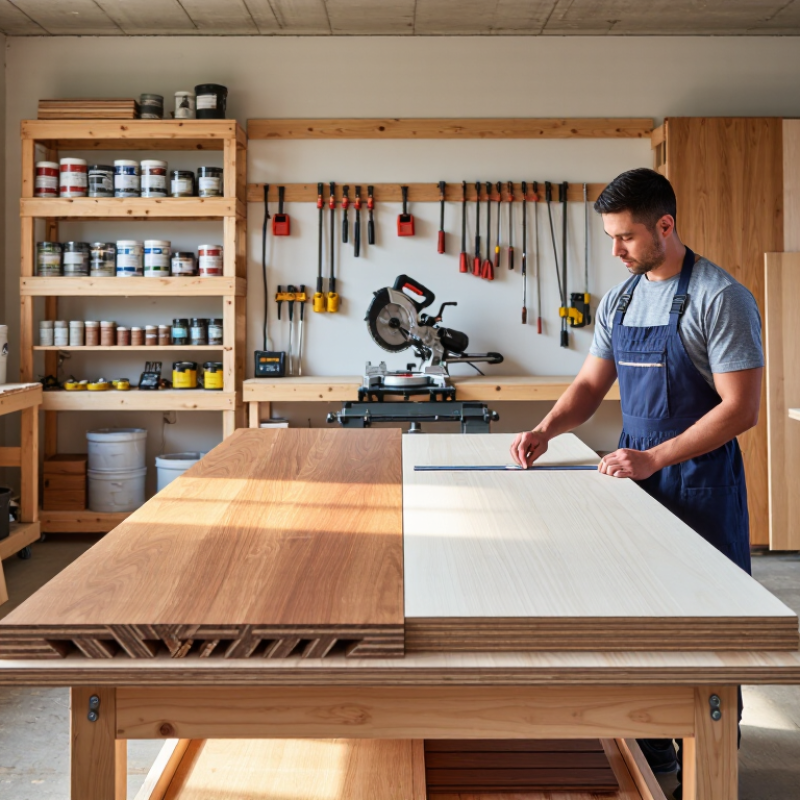
Furniture-grade plywood is not one universal legal grade. It is a practical industry term for panels selected for visible surfaces, clean edges, stable construction, and reliable machining. Unlike basic construction plywood, it usually has better face veneers, fewer core voids, tighter thickness control, and smoother sanding. ANSI/HPVA HP-1-2020 provides recognized requirements for hardwood plywood, while APA standards help evaluate panel strength and bond performance. These references matter because a beautiful surface can still hide weak glue lines or internal gaps.
Emissions also affect quality. The U.S. Environmental Protection Agency’s TSCA Title VI guide sets a 0.05 parts-per-million formaldehyde limit for hardwood plywood. Ask for compliance documentation, not just a sales claim. Inspect the panel edge under bright light. Look for overlapping plies, open voids, uneven sanding, and swollen corners. A clean edge should accept screws without sudden splitting. A practical shop test is simple: cut a small sample and check whether the veneer chips easily. It should not.
Moisture deserves attention.
The USDA Forest Products Laboratory notes that wood-based panels respond to changing humidity, so storage conditions can influence later movement. Keep sheets flat, supported, and acclimated before fabrication. I would not assume a higher price guarantees better furniture performance. Some expensive panels still show thin face veneers or inconsistent cores. My own quality judgment would remain cautious until the supplier provides thickness tolerance, veneer-core information, emissions evidence, and a usable sample. Even then, selection involves compromise between appearance, stability, machining, and budget.
How to read this chart: EN 636 class numbers describe the intended moisture exposure of plywood, not its strength or overall furniture quality. Class 1 is intended for dry conditions, Class 2 for humid conditions, and Class 3 for exterior conditions.
For furniture, select the lowest class that matches the environment, then verify face veneer quality, core construction, thickness tolerance, bonding performance, formaldehyde emissions, and the applicable local standard. “Furniture grade” is a market description rather than one universal global specification.
Furniture-grade plywood starts with the core, not the surface. Veneer cores offer familiar screw-holding behavior and visible edge layers. MDF or particleboard cores often provide flatter panels, especially for painted doors. However, their edges need careful sealing.
Check the edge. According to the USDA Forest Products Laboratory’s Wood Handbook (2021), interior wood products commonly reach about 6–8% moisture content in conditioned spaces. Choose panels stored near your project’s environment, or movement may appear after installation.
Veneer quality requires closer inspection. Look for balanced face and back veneers, consistent thickness, and minimal core voids. A beautiful walnut face cannot correct a weak inner structure. It happens.
The Hardwood Plywood and Veneer Association’s HP-1 standard uses face grades such as A, B, C, and D, with repairs and visible defects increasing down the scale. Yet grading language can vary between suppliers, so request the exact standard, not just “premium.”
Surface grade affects labor more than many buyers expect. An A face may need only light sanding, while a lower grade can require filling, patching, or opaque paint. The APA Engineered Wood Association’s plywood guidance also distinguishes structural performance from appearance grading; one does not guarantee the other.
I once rejected a flawless-looking panel after finding open voids along its cut edge. The lesson is uncomfortable: inspect the core, veneer book-match, moisture condition, and surface under direct light. Perfect samples can mislead.
Choosing furniture-grade plywood in 2026 starts with the project, not the price. A wardrobe door needs a stable, smooth panel. A kitchen carcass needs moisture resistance and reliable screw holding. For visible surfaces, select A-grade or equivalent face veneers, a low-void core, and calibrated thickness. The USDA Forest Products Laboratory’s Wood Handbook reports plywood density commonly ranging from about 400 to 700 kg/m³, depending on wood species and construction. Heavier panels usually feel stronger, but they also increase cabinet weight.
For painted furniture, multi-ply hardwood panels with consistent faces are practical. Their fine layers reduce edge tear-out during routing. For shelving, choose at least 18 mm thickness for moderate spans, then verify deflection under the expected load. The panel’s published bending strength matters more than a beautiful face. The 2023 FAO Global Forest Products Facts and Figures report plywood production at well over 170 million cubic metres worldwide, showing a broad supply base, but quality still varies sharply between mills. Ask for thickness tolerance, formaldehyde emissions class, moisture resistance, and test documentation.
Bathrooms and utility rooms need panels rated for humid conditions, not merely “water-resistant” wording. Exterior-grade adhesive helps, but exposed edges still need sealing. I have seen attractive plywood warp after one season because the back face was ignored. That was avoidable. For premium tables, check veneer matching and core gaps under a cut edge. A cheaper panel can work, yet savings disappear after sanding, filling, and rejected parts. Specifications should be written into the purchase order, not remembered at the workshop.
Furniture-grade plywood should be judged by evidence, not a smooth front face. In workshop inspections, I check a fresh cut edge with a flashlight. Even plies, tight glue lines, and few core gaps usually indicate better manufacturing control. A polished surface can hide weak inner layers. Ask for thickness tolerance, veneer species, and production records. I once trusted an attractive panel that warped after installation. That mistake still influences my inspections.
Moisture resistance starts with the panel’s intended environment. For kitchens or humid rooms, request the panel’s moisture classification and adhesive information. Do not confuse “water-resistant” with waterproof. Place a moisture meter on several points, including the edge. Compare readings across the sheet. Uneven results deserve questions. A small sample can reveal swollen veneers after controlled exposure, but this is not a complete laboratory test. Seal exposed edges during installation; they absorb water fastest.
Safety requires more than low odor. Request formaldehyde emission documentation and confirm it matches the product batch. Inspect the surface for loose splinters, resin bubbles, and sanding burns. Check whether the core remains stable when screws enter it. Reliable suppliers should explain testing methods, storage conditions, and corrective procedures. Documents can be outdated, though. Verify dates and batch numbers. If answers feel vague, pause the purchase. A cheaper sheet may create costly rework, dust, and delays.
Choosing furniture-grade plywood in 2026 starts with supplier evidence, not polished photographs. Ask for core species, veneer thickness, adhesive class, emissions testing, and production dates. A reliable supplier shares current test reports and batch records without hesitation. Request a sample panel. Inspect its edges, face symmetry, flatness, and screw-holding feel. Small flaws matter.
Talk with the technical contact, not only a sales representative. Ask how defects are sorted, stored, and replaced. Good suppliers explain moisture control and packaging procedures precisely. Visit the factory when order volume justifies travel. Check panel stacks for swelling, dust, and damaged corners. I once trusted a clean sample too quickly. The shipment showed uneven cores. That mistake changed my inspection checklist.
Estimate long-term value through total cost, not sheet price. Compare usable yield after cutting, finishing labor, replacement rates, freight, and storage losses. A slightly higher-grade panel may reduce sanding and rejected doors. Calculate expected cost per usable component. Request written tolerance ranges and remedy terms. Review delivery consistency across several orders. Supplier quality can drift. Keep retained samples, photographs, and moisture readings for every batch. Perfect forecasts are rare. Recheck assumptions after six months. A cheaper panel is not always economical.
Use this comparison as a practical purchasing benchmark for interior furniture, cabinetry, shelving, and built-ins. Specifications, availability, and prices vary by country, thickness, certification, order volume, and delivery distance, so confirm every value with the supplier before placing an order.
| Material Option | Typical Core Construction | Recommended Face Grade | Common Thicknesses | Typical Use | Key Quality Checks | Indicative Price Range per 2440 × 1220 mm Sheet | Expected Service Life in Dry Interior Use | Long-Term Value |
|---|---|---|---|---|---|---|---|---|
| Standard hardwood veneer-core plywood | Cross-laminated hardwood veneers with a balanced panel structure | A/B or B/B, depending on the visible surface requirement | 12, 15, 18, 21 mm | Cabinet carcasses, shelving, drawer parts, and general furniture | Check flatness, veneer voids, open edges, core gaps, and consistent thickness | US$45–90 | 15–25 years | High when the panel is flat, well bonded, and properly sealed |
| Decorative hardwood plywood | Stable structural core with a selected natural-wood face veneer | A/A or A/B, with matching veneer requirements specified in writing | 12, 18, 21 mm | Visible cabinet doors, furniture sides, wall panels, and premium interiors | Inspect veneer matching, color consistency, splice quality, surface repairs, and finish compatibility | US$70–150 | 15–30 years | Very high for visible components where replacement or refinishing is costly |
| Multi-ply furniture panel | Many thin veneer layers for improved screw holding and dimensional stability | B/B or better; select A/B for exposed faces | 15, 18, 21 mm | High-use cabinets, shelving, worktables, and joinery requiring repeated fastening | Check layer count, edge quality, screw-holding performance, panel weight, and flatness | US$65–130 | 20–30 years | High where structural stability and fastener performance reduce repairs |
| Low-emission interior plywood | Veneer-core or multi-ply construction manufactured with controlled formaldehyde emissions | A/B, B/B, or project-specific appearance grade | 12, 15, 18 mm | Bedrooms, offices, schools, healthcare interiors, and enclosed living spaces | Request a current emissions test report and confirm the applicable regional standard | US$55–115 | 15–25 years | High when indoor air quality, documentation, and occupant comfort are priorities |
| Moisture-resistant plywood | Durable bonded veneer layers intended for intermittent humidity exposure | B/B or better, with sealed edges for furniture applications | 12, 15, 18, 21 mm | Kitchen units, laundry-room furniture, utility storage, and humid interiors | Confirm adhesive classification, edge sealing method, glue-line integrity, and storage conditions | US$60–125 | 15–25 years indoors when water is not allowed to accumulate | High in humid rooms; over-specification may reduce value in dry rooms |
| Exterior-bonded plywood for demanding interiors | Veneer layers bonded with adhesive intended to withstand wet exposure better than interior grades | B/B or better, subject to the required visible finish | 12, 18, 21 mm | Commercial interiors, semi-enclosed furniture, and areas exposed to occasional water | Verify the actual bonding classification; exterior bonding does not make the panel waterproof | US$70–145 | 20–30 years indoors with protected edges and surfaces | Good only when the additional moisture resistance is genuinely needed |
| Evaluation Dimension | Suggested Weight | Evidence to Request | Pass Benchmark | Why It Affects Long-Term Value |
|---|---|---|---|---|
| Technical specification accuracy | 20% | Product data sheet, thickness tolerance, face grade, core description, adhesive classification, and applicable test standards | All critical specifications are written into the quotation and purchase order | Prevents receiving a cheaper construction that creates machining, finishing, or durability problems |
| Quality consistency | 20% | Recent batch photos, sample panels, inspection records, and agreed acceptance criteria | Sample approval is linked to measurable production tolerances | Consistent panels reduce sorting, waste, rework, and visible color or veneer mismatches |
| Compliance and emissions documentation | 15% | Current laboratory report, chain-of-custody document where required, and regulatory declarations | Documents identify the product, test date, standard, and manufacturing batch or series | Reduces compliance risk and supports healthier indoor environments |
| Moisture and storage controls | 10% | Packaging method, warehouse conditions, moisture protection, and handling instructions | Panels are protected from rain, standing water, and uncontrolled humidity during transit and storage | Moisture-related swelling and warping can eliminate the apparent savings from a low purchase price |
| Dimensional accuracy | 10% | Measured length, width, thickness, squareness, and flatness from several panels | Results remain within the tolerances agreed for the project | Accurate panels improve CNC yield, joint alignment, and installation speed |
| Order flexibility and continuity | 10% | Minimum order quantity, lead time, repeat-order policy, and reserve-stock options | Supplier can support the project schedule and reproduce the approved specification | Continuity lowers the risk of mismatched replacement panels and schedule delays |
| Claims and replacement process | 10% | Written defect policy, inspection window, photographic evidence requirements, and replacement terms | Claims process and responsibility for freight are clearly defined before purchase | Fast resolution limits downtime and protects the usable yield of the order |
| Delivered cost transparency | 5% | Item price, cutting fees, packing, freight, duties, taxes, and payment charges | The quotation shows a complete delivered-cost calculation | A low unit price may not represent the lowest total acquisition cost |
| Cost Component | Budget Option | Higher-Quality Option | Calculation Basis | Interpretation |
|---|---|---|---|---|
| Purchase price per sheet | US$55 | US$85 | Illustrative delivered planning price for one 2440 × 1220 mm sheet | The higher-quality option costs US$30 more at purchase |
| Estimated usable yield | 88% | 95% | Usable area after defects, trimming, and layout losses | Better flatness and fewer defects can reduce material waste |
| Effective material cost per usable square metre | Approximately US$20.50 | Approximately US$24.00 | Price ÷ usable area; nominal sheet area is approximately 2.98 m² | The effective gap is smaller than the original unit-price gap |
| Expected rework and sorting allowance | 8% of material and labor cost | 3% of material and labor cost | Planning allowance; actual results depend on inspection and fabrication controls | Lower rework can offset part of the higher purchase price |
| Expected service period in dry interiors | 10–15 years | 15–25 years | Assumes correct design, dry storage, sealed edges, and normal indoor use | Service life depends on construction and maintenance, not plywood grade alone |
| Replacement and downtime risk | Medium | Low to medium | Based on defect rate, repeat availability, and supplier claims process | Important for commercial projects and installed furniture |
| Overall long-term value | Acceptable for low-risk, price-sensitive work | Usually better for visible, structural, or high-use furniture | Compare delivered cost, usable yield, labor, rework, and expected replacement cost | The lowest purchase price is not necessarily the lowest lifecycle cost |
Planning values are illustrative benchmarks rather than fixed market quotations. Confirm local pricing, standards, testing requirements, and installation conditions for each project.
