231-941-0215 sale@namkeenmachine.com 2707 Aero Park Drive Traverse City, MI
Eng
  • Eng
  • Deu
  • Fra

China Best Belt Speed Control Inverter Supplier?

Choosing China’s best Belt Speed Control Inverter supplier is not a search for the lowest quotation. It is a check of engineering fit, production quality, and support after delivery. A conveyor carrying cartons needs different control behavior from one moving hot material or heavy loads. The details matter.

A practical takeaway consistent with motor-drive scholar Ion Boldea’s technical work is: “Match the drive to the motor and load, then verify performance under real operating conditions.” This is a paraphrased takeaway, not a verbatim quotation. It points to the questions buyers should ask. Can the supplier size the inverter for starting torque and frequent speed changes? Can it explain overload capacity, braking options, and cooling requirements? Will it provide clear wiring diagrams and parameter settings?

Look beyond a polished product page. Request test records, model-specific manuals, and evidence of quality-control procedures. Ask how the unit behaves when a belt starts under load, or when dust raises cabinet temperature. A supplier that answers with specific ratings and documented tests offers more confidence than one that relies on broad claims.

Price still matters. So does communication. Yet neither replaces a site trial. A sample may run smoothly on a bench and behave differently on a long conveyor. That gap is easy to underestimate. This guide compares supplier capabilities, product selection, and verification steps, helping buyers judge which Chinese manufacturer fits their application—not just which one promises the fastest shipment.
China Best Belt Speed Control Inverter Supplier?

What Is a Belt Speed Control Inverter?

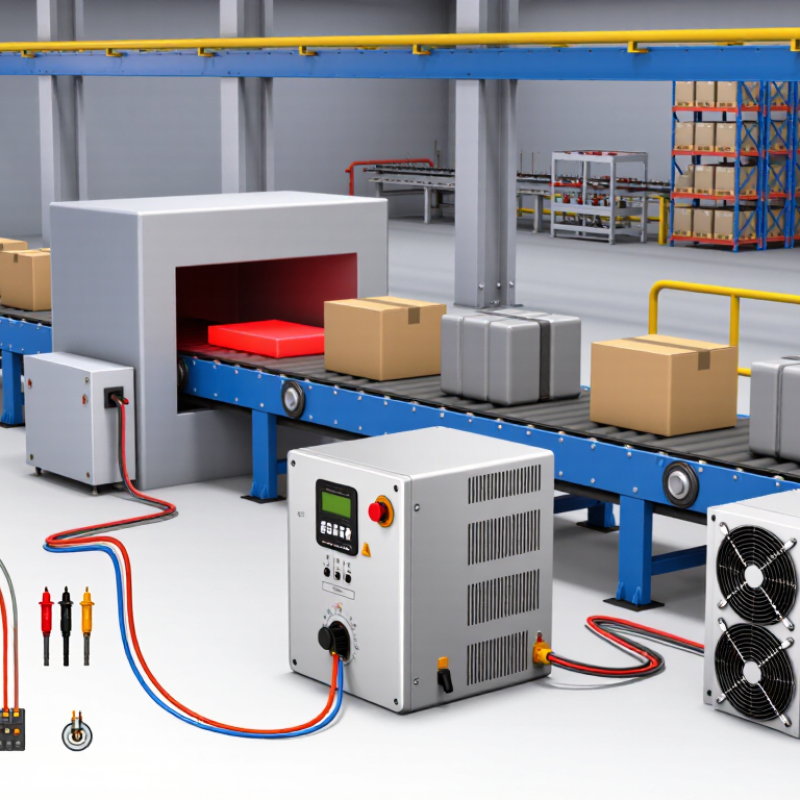
A belt speed control inverter is an electronic drive that adjusts the speed of a conveyor’s motor. It changes the frequency supplied to the motor, allowing the belt to run slower or faster than its normal operating speed. An operator can set the speed through a control panel or, in some systems, an external signal from a sensor or controller.

For example, a packaging line may need a slow belt while workers position cartons, then a higher speed during steady production. The inverter can also provide a gradual start, reducing sudden belt movement and mechanical stress. Actual performance depends on the motor, load, belt design, and drive settings. A calculation alone may not capture every condition. Dust, heavy starts, or frequent speed changes can affect the result, so commissioning should include real operating tests.

Tips: Check motor power, rated current, and required speed range before choosing an inverter. Confirm that the motor can handle low-speed operation, since cooling may decrease when its fan turns slowly. Test acceleration and braking with the actual load. Small details matter. A speed setting that works on an empty belt may feel quite different with full cartons.

China Best Belt Speed Control Inverter Supplier? - What Is a Belt Speed Control Inverter?
Parameter Description and Practical Guidance
What it is A belt speed control inverter is a variable-frequency drive (VFD) used with a compatible AC motor. It adjusts the motor’s output frequency to vary motor speed and, through the drive system, conveyor belt speed.
Main purpose To regulate conveying speed for process control, adjust material throughput, and support controlled starts and stops. The actual result depends on the motor, drive, transmission, conveyor load, and control setup.
Belt speed calculation For a belt driven directly by a pulley, approximate belt speed as v = π × D × n / 60, where v is in m/s, D is pulley diameter in metres, and n is pulley speed in revolutions per minute. With a gearbox or other transmission, calculate pulley speed using the transmission ratio.
Motor and inverter matching Check the motor’s rated voltage, current, power, frequency, and type against the inverter’s ratings and supported motor-control modes. Select based on the motor nameplate and application requirements, not power rating alone.
Speed range There is no single speed range suitable for every conveyor. Set the operating frequency limits according to the motor, load, cooling method, gearbox, belt, and machine design; follow the motor and inverter manufacturers’ instructions.
Control methods Common options include keypad control, external analog references, digital inputs, and communication interfaces. The available methods depend on the inverter model and its configuration.
Open-loop or closed-loop Open-loop control sets motor frequency without measuring belt speed. Closed-loop speed regulation uses feedback, such as an encoder or speed sensor, when supported and correctly configured. Feedback may improve speed regulation under changing loads.
Starting and stopping Acceleration and deceleration ramps can be configured to reduce abrupt speed changes. The appropriate settings depend on conveyor inertia, load, process needs, and braking requirements.
Important selection checks Confirm supply voltage and phase, motor current, required speed range, overload needs, control and feedback options, enclosure and ambient conditions, and applicable safety requirements. Verify compatibility with the conveyor’s mechanical drive.
Safety note A VFD is not, by itself, a complete machine-safety system. Provide suitable guarding, emergency-stop functions, electrical protection, installation, and maintenance procedures in accordance with applicable regulations and equipment instructions.

How Does a Belt Speed Control Inverter Regulate Conveyor Speed?

A belt speed control inverter regulates conveyor speed by varying the frequency supplied to its AC motor. Because motor speed follows supply frequency, lowering the frequency slows the belt; raising it speeds the belt. The inverter also adjusts voltage to maintain useful motor torque and applies controlled acceleration and deceleration ramps. On a packaging line, this can start the belt gently instead of jolting cartons at a transfer point. With a speed sensor or encoder, feedback can correct deviations as the load changes. Without feedback, the drive follows its command, not necessarily the belt’s actual speed. Small changes matter. The IEA’s 2011 report, Energy-Efficiency Policy Opportunities for Electric Motor-Driven Systems, estimates these systems use about 45% of global electricity. That figure covers many motor applications, not conveyors alone.

An inverter may cut energy use when a conveyor can run slower without disrupting throughput, but savings depend on load, motor sizing, and operating hours. Speed control can also reduce product spills and mechanical shock at starts. Still, it is not a cure-all. A belt running too slowly may cause material buildup, while aggressive acceleration can strain couplings and gearboxes. During commissioning, technicians should check minimum speed, motor cooling, ramp times, and sensor readings under real load. A useful setting on an empty belt may behave differently with wet, heavy material; that part often needs careful adjustment.

How a Belt Speed Control Inverter Regulates Conveyor Speed

With a fixed motor, gearbox, and pulley arrangement, conveyor speed generally changes in proportion to the inverter’s output frequency. This illustrative example uses a nominal belt speed of 1.5 m/s at 50 Hz; actual speed can vary with motor slip, load, and mechanical setup.

What Factors Define a Reliable Belt Inverter Supplier?

China Best Belt Speed Control Inverter Supplier?

A reliable belt inverter supplier understands the full drive system, not only the inverter’s rated power. They should ask about motor type, conveyor load, belt width, starting frequency, and required speed range. These details affect sizing and control settings. A supplier who requests your motor nameplate data and operating conditions is more useful than one who recommends a model immediately.

Tips: Share a clear photo of the motor nameplate, plus the conveyor’s usual and peak load. Ask for wiring diagrams, parameter guidance, and a written explanation of protection features. Small details matter.

Before ordering, check whether the supplier can explain commissioning support and provide practical troubleshooting steps. Ask how they handle common issues, such as belt slipping during acceleration or speed changes under varying loads. A sample test with your motor can reveal problems that a catalogue cannot. Response time matters, too. Still, no supplier can predict every site condition; cable length, dust, and mechanical wear may change performance. That is worth discussing openly. Compare technical answers and documentation, not only price, when assessing suppliers in China.

How to Evaluate Belt Speed Control Inverter Suppliers in China

China Best Belt Speed Control Inverter Supplier?

How to Evaluate Belt Speed Control Inverter Suppliers in China

A reliable supplier should ask about the belt, motor, load, and operating environment before recommending an inverter. Belt speed can change as materials accumulate, so share the normal and peak load, required speed range, and start-stop frequency. Check that the proposed unit matches the motor’s rated voltage and current. A neat brochure is not enough.

Ask for clear technical documentation, wiring diagrams, and test records for the offered model. Discuss overload capacity, braking needs, enclosure protection, and how the inverter handles low-speed operation. If possible, review a sample or request a witnessed test using a comparable motor and load. Check the supplier’s response time and spare-parts process, too. Small details matter. A confident sales answer can still leave gaps; verify important specifications in writing.

Tip: Send the same operating data to each shortlisted supplier. Compare their answers line by line, especially on commissioning support and warranty terms. Ask who will troubleshoot a fault remotely, and what information they need. If an answer feels vague, pause and ask for a practical example.

Which Industries Use Belt Speed Control Inverters?

Belt speed control inverters are used wherever materials must move at a controlled rate. In mining and quarrying, they help conveyors carry ore and stone through transfer points. Operators can adjust speed to reduce spillage and limit sudden mechanical stress. Dust, heavy loads, and long conveyor runs still demand careful equipment selection.

Food processing and packaging plants use them to coordinate belts with washing, sorting, filling, and labeling equipment. A small speed change can prevent bottles from crowding or produce from piling up. Textile mills also rely on controlled belt movement to keep fabric feeding steadily. Consistency matters. Yet product weight and belt condition can change during a shift, so settings need real-world checks.

Warehouses and distribution centers use these inverters on sorting and parcel-handling lines, while agricultural facilities apply them to grain elevators and processing conveyors. Wastewater plants may use controlled belts in screening or sludge-handling systems. Before choosing a unit, engineers typically consider motor power, load variation, operating environment, and required speed range. A common oversight is focusing only on rated power. That is not enough. In practice, commissioning takes adjustment, and the first settings may not suit every product or shift.